Castor Oil vs Coconut Oil for Baby Massage: Which Is Better?
Introduction: Choosing the Right Oil for Baby Massage
Baby massage is a deeply rooted tradition in many Indian households. It helps nourish the baby’s skin, relax muscles, improve circulation, and strengthen the bond between parent and child. However, one important decision parents often face is which oil to use.
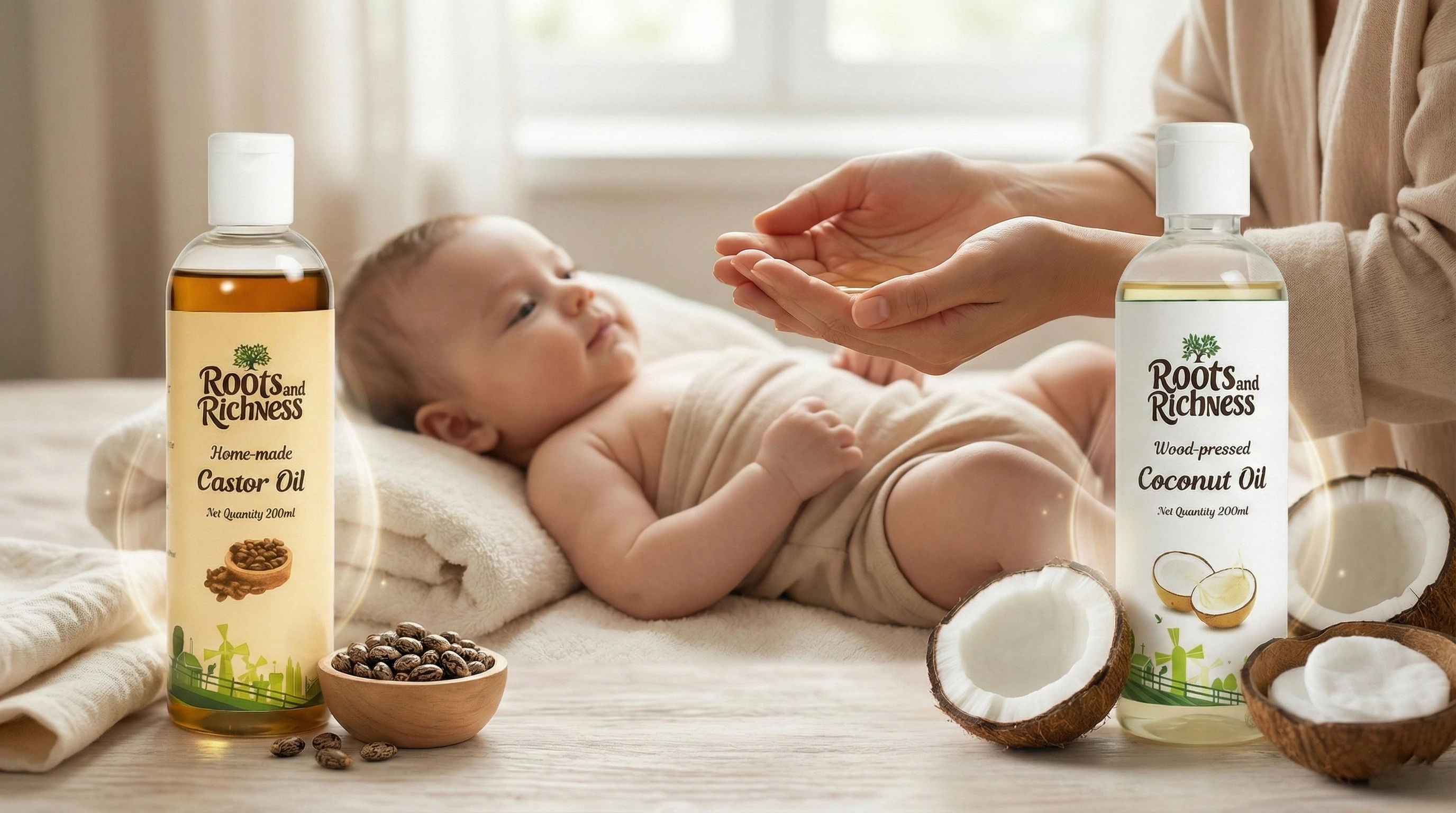
Two of the most commonly recommended traditional oils are castor oil and coconut oil. Both have been used for generations, but they differ in texture, warmth, absorption, and suitability depending on the baby’s needs.
This guide compares castor oil vs coconut oil for baby massage, helping parents make an informed and safe choice.
Understanding Castor Oil for Baby Massage
Castor oil is a thick, naturally warming oil traditionally used for massage and external wellness practices.
Key characteristics of castor oil:
- Thick and slow-absorbing
- Naturally warming
- Free from fragrance when pure
- Traditionally wood-pressed or mechanically extracted
Because of its density, castor oil stays on the skin longer, making it ideal for slow, relaxing massages. This is one reason it has been traditionally used during cooler weather or nighttime massage routines.
When parents choose a pure, chemical-free castor oil, it can be gentle and effective for baby massage.
Shop Pure Castor oil for baby massage: https://rootsandrichness.in/products/wood-pressed-castor-oil
Understanding Coconut Oil for Baby Massage
Coconut oil is lighter in texture and absorbs quickly into the skin. It is widely used in warmer regions and during summer months.
Key characteristics of coconut oil:
- Light and fast-absorbing
- Naturally cooling
- Mild aroma when unrefined
- Leaves minimal residue
Coconut oil works well for babies who prefer a lighter oil or for short massage routines. Its cooling nature makes it a popular choice in hot climates.
Castor Oil vs Coconut Oil: Key Differences Explained
Texture and Absorption
Castor oil is thick and slow-absorbing, allowing for a longer massage. Coconut oil is light and absorbs quickly, making it suitable for shorter massages.
Warmth vs Cooling Effect
Castor oil has a naturally warming effect, which can help relax muscles and provide comfort, especially in cooler weather. Coconut oil has a cooling nature, making it ideal for hot or humid conditions.
Massage Experience
Castor oil supports deeper, slower massage strokes due to its thickness. Coconut oil supports quick and gentle massage strokes.
Suitability for Skin Types
Castor oil is often preferred for babies with dry skin as it helps lock in moisture. Coconut oil suits babies with normal skin and those living in warmer climates.
Traditional Usage
Traditionally, castor oil was used for nighttime or winter massages, while coconut oil was commonly used during summer or daytime routines.
Which Oil Is Safer for Babies?
Both castor oil and coconut oil can be safe for babies when they are pure and free from additives.
Safety depends on:
- No artificial fragrance
- No preservatives
- No chemical solvents
- Traditional or natural extraction methods
Parents should always perform a patch test before first use, regardless of which oil they choose.
When Should You Choose Castor Oil?
Castor oil may be a better choice if:
- Your baby has dry skin
- You prefer a slow, calming massage routine
- You massage your baby at night
- The weather is cooler
Traditional practices often favored castor oil for its warming and nourishing properties.
When Should You Choose Coconut Oil?
Coconut oil may be a better choice if:
- You live in a hot or humid climate
- Your baby prefers a light oil
- You want a quick massage before bath time
- The weather is warm
Many parents alternate oils based on season and baby comfort.
Can Castor Oil and Coconut Oil Be Mixed?
Some families mix castor oil and coconut oil to balance thickness and absorption. While this can work, it is not necessary.
Pure oils used individually are equally effective when chosen according to the baby’s needs.
What Do Traditional Practices Recommend?
Traditional baby care routines were never rigid. Oils were chosen based on:
- Season
- Climate
- Baby’s skin condition
- Massage timing
This flexibility is still relevant today. Parents do not need to follow a one-size-fits-all approach.
For a deeper understanding of how castor oil supports baby massage and family wellness, explore our complete guide on traditional usage.
Frequently Asked Questions
Is castor oil better than coconut oil for baby massage?
Both oils are beneficial. The choice depends on climate, baby’s skin type, and massage preference.
Can castor oil be used daily for babies?
Yes, when used externally and when the oil is pure and chemical-free.
Which oil is better in winter?
Castor oil is generally preferred during colder months due to its warming nature.
Which oil is better in summer?
Coconut oil is often preferred in summer because it is cooling and lightweight.
Conclusion: Choose Based on Your Baby’s Needs
There is no single “best” oil for every baby. Both castor oil and coconut oil have their place in traditional baby massage routines.
The key is choosing pure, traditionally prepared oils and observing what works best for your baby’s comfort and skin health.
When used mindfully, both oils can support a gentle, nurturing massage experience that benefits both baby and parent.
Featured Products Mentioned in This Article
Experience the premium wood-pressed oils we discussed in this article. Each product is traditionally processed and sourced directly from farmers.