Complete Guide to Wood-Pressed Oils for Healthy Indian Cooking
Discover why wood-pressed oils are healthier than refined oils. Learn benefits, how they’re made, best uses for Indian cooking, storage tips, and how to choose authentic wood-pressed oils.
Quick Summary — What You Should Know
Wood-pressed oils are made using slow mechanical extraction that preserves natural nutrients, aroma, and flavor. Unlike chemically refined oils, wood-pressed oils retain antioxidants, vitamins, and healthy fats — making them a better choice for mindful, everyday Indian cooking. This guide explains how wood-pressed oils are made, their health and culinary benefits, which oils to use for which dishes, how to store them, and how to spot high-quality, authentic products.
Introduction: Why Tradition Matters for Everyday Cooking
For generations, Indian kitchens used oils pressed slowly from seeds and nuts using wooden ghanis or stone presses. These methods prioritized gentle extraction and retention of natural goodness. Industrial refining changed the landscape — increasing yield and shelf life but also removing nutrients and adding chemical steps.
As consumers grow more health-aware, wood-pressed oils have returned to the spotlight. They’re not a luxury — they are a return to a more natural, nutrient-respectful way of cooking. This guide will help you understand why they matter, how to use them, and how to choose authentic products that deliver real benefits.
What Exactly Are Wood-Pressed Oils?
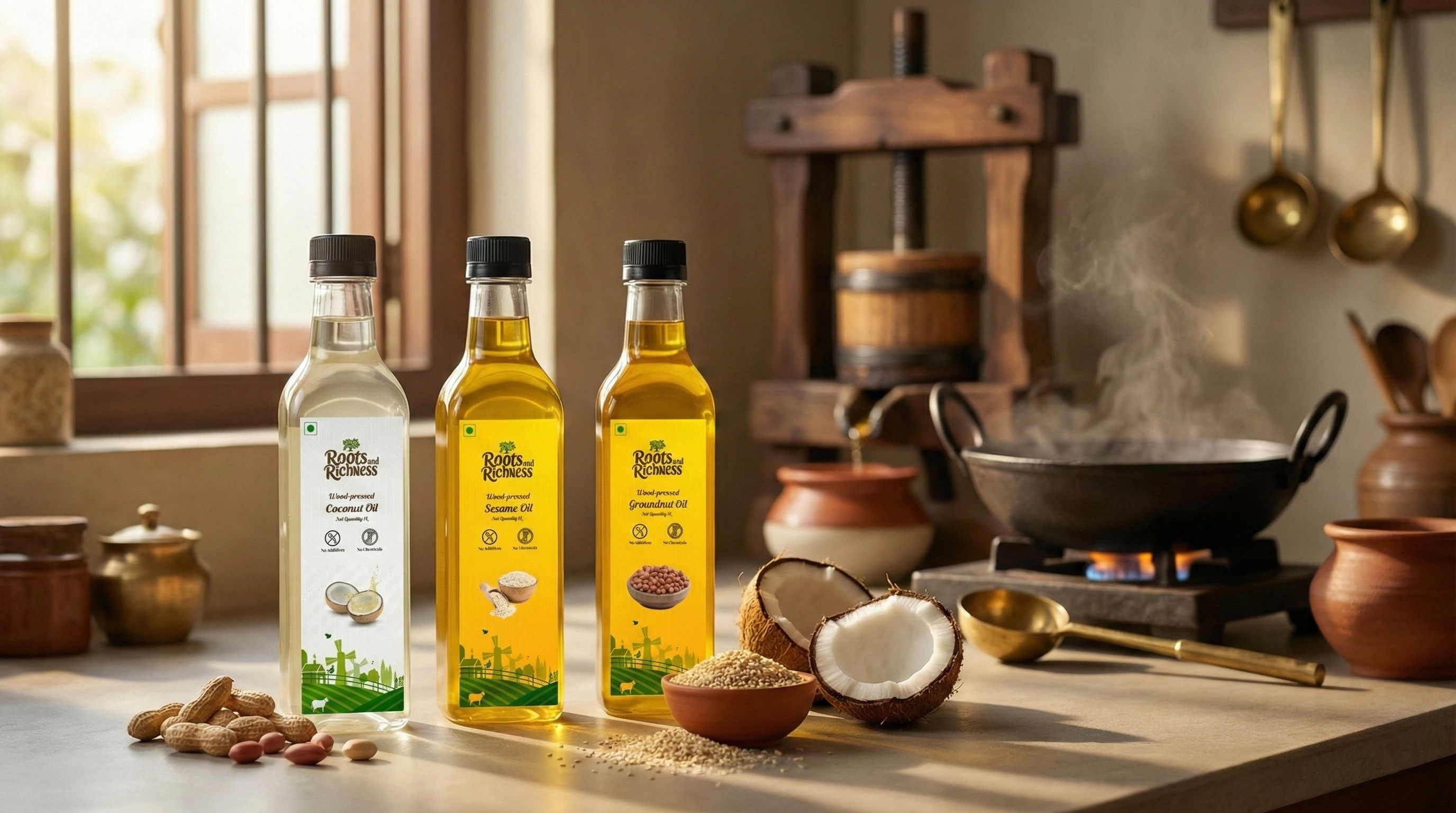
Wood-pressed oils are extracted through a slow, mechanical pressing process that generates minimal heat. The classic method uses a wooden or stone press (ghani/chekku) that crushes seeds and nuts gently, allowing oil to separate without high temperatures or chemical solvents.
Key characteristics:
- Slow extraction at low temperature
- No chemical solvents (hexane-free)
- Minimal processing — no bleaching or deodorizing
- Distinct aroma and natural color
Because the process is gentle, the oil keeps more of its original nutrients and flavor compared to refined or chemically extracted oils.
How Wood-Pressed Oils Differ from Cold-Pressed and Refined Oils
People often confuse wood-pressed with cold-pressed. They overlap, but are not always identical.
Wood-pressed vs Cold-pressed:
- Both avoid chemical solvents and high heat, but “wood-pressed” emphasizes traditional wooden ghani/chekku extraction. Cold-pressed can be mechanical using modern presses with strict temperature control.
Wood-pressed vs Refined:
- Refined oils undergo solvent extraction, bleaching, and deodorizing. These steps strip flavor and nutrients. Wood-pressed oils retain natural compounds and taste.
Bottom line: a well-made wood-pressed oil is closer to the seed’s natural profile and thus has greater nutritional integrity.
Proven Health Benefits of Wood-Pressed Oils
Below are practical, evidence-aligned benefits that matter for everyday cooking and family health.
1. Better Nutrient Retention
Minimal heat preserves fat-soluble vitamins (like vitamin E) and natural antioxidants. These compounds support skin health, immunity, and cellular protection.
2. Healthier Fat Profile
Wood-pressed oils retain natural balances of monounsaturated and polyunsaturated fats. When used mindfully, they support heart health better than repeatedly heated refined oils.
3. No Chemical Residues
Because there are no solvent extraction steps, wood-pressed oils generally don’t contain traces of hexane or industrial processing residues.
4. Natural Antioxidants
Many traditional oils (sesame, groundnut, coconut) contain seed-specific antioxidants. These substances reduce oxidative stress and support long-term wellbeing.
5. Better Digestion & Taste
Natural flavor encourages mindful cooking and often results in less oil usage. Anecdotally, many families report lighter digestion after switching from refined oils.
Which Wood-Pressed Oil for Which Use — Practical Guide
Choosing the right oil for each cooking method maximizes flavor and health benefits.
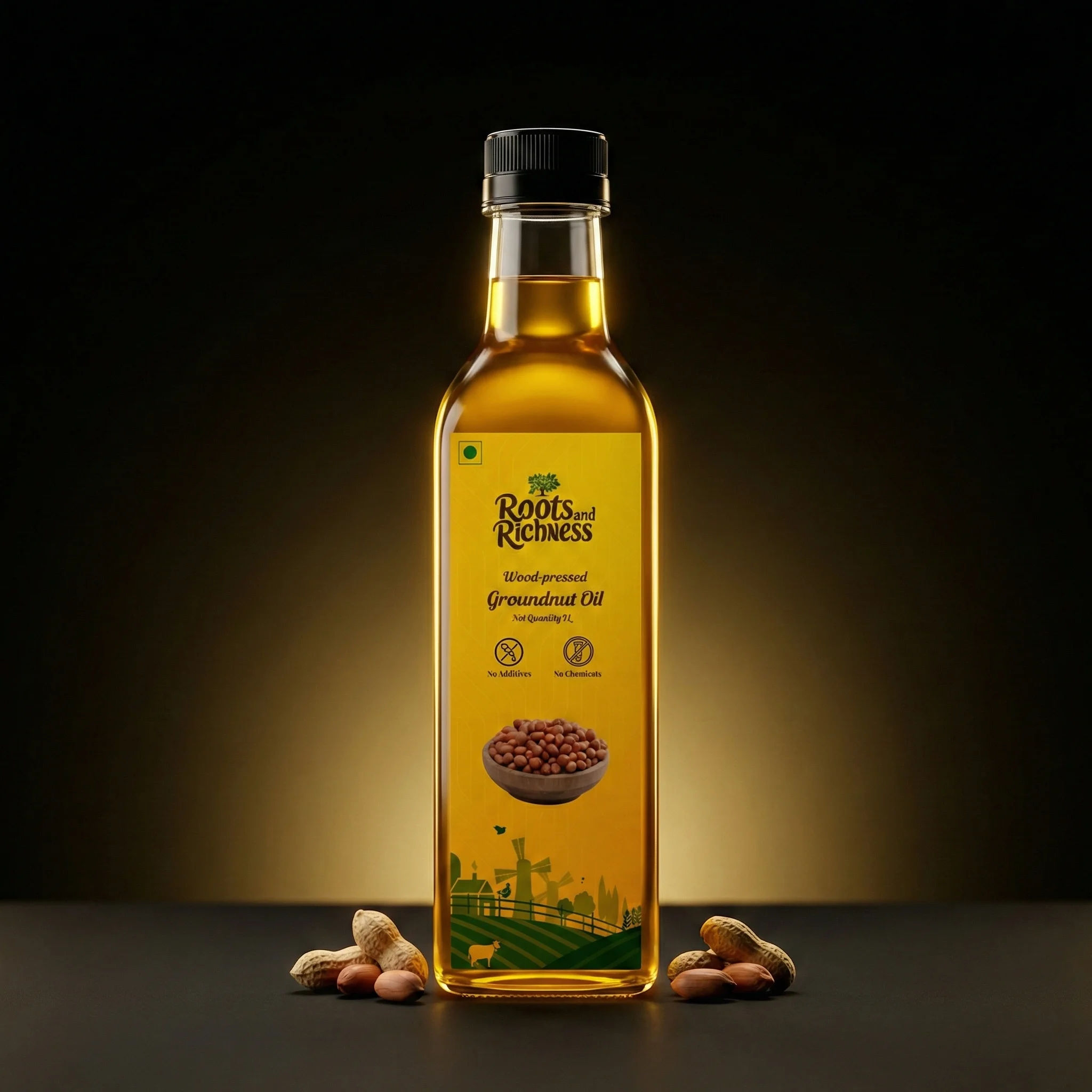
Groundnut (Peanut) — Everyday Cooking & Frying
- Good for sautéing, shallow frying, and tadkas.
- Stable at medium heat and has a neutral-nutty taste.
Sesame — Tempering, Curries & Ayurvedic Uses
- Strong aroma and warming properties.
- Popular in South Indian and Bengali cooking; great for finishing and tempering.
Coconut — Coastal Cooking & Light Frying
- Naturally suited to coastal Indian cuisine.
- Use for light frying, curries, and traditional recipes.
Mustard (where regionally used) — Strong Flavor for Pickles & Tempering
- Pungent, ideal for tempering and pickles; use sparingly if you prefer milder taste.
Castor — External Uses & Baby Massage (not cooking)
- Not typically used as a daily cooking oil. Traditional uses often relate to massage and topical care.
Smoke Point: Practical Notes (What Home Cooks Need to Know)
Smoke point guidance for wood-pressed oils varies by batch and processing; avoid assuming refined smoke-point numbers apply. Practical rules:
- Use medium heat for most wood-pressed oils.
- For deep frying at very high temperatures, prefer oils suited for higher heat or use a refined option occasionally (but avoid repeated reuse).
- Monitor oil color and smell — if it smokes or smells off, discard.
How to Use Wood-Pressed Oils Without Losing Benefits
- Use oils for sautéing, tempering, and shallow frying rather than prolonged high heat.
- Finish dishes with a spoon of oil to preserve delicate nutrients and aroma.
- Avoid repeatedly reheating the same oil.
- Combine oils mindfully — e.g., a small amount of sesame for finishing adds aroma without heavy heating.
How to Store Wood-Pressed Oils (Prevent Rancidity)
Proper storage preserves aroma and nutrients:
- Store in a cool, dark place away from direct sunlight.
- Use opaque or dark glass bottles where possible.
- Keep lids tightly closed to minimize oxygen exposure.
- Use within recommended shelf life (label guidance) and avoid prolonged storage near stoves.
How to Spot Authentic, High-Quality Wood-Pressed Oils
When choosing a product, check for:
- Explicit mention of extraction method (wood-pressed / chekku / ghani)
- “No solvent” or “hexane-free” claim
- Transparent sourcing — farm or region info
- Minimal ingredients (should be just the oil)
- Sensory cues — natural aroma, light color variation (not neutral)
Shop Authentic, Premium Wood-pressed oils here: https://rootsandrichness.in/products
Common Myths & Clarifications
Myth: Wood-pressed oils are always heavier and unhealthy.
Clarification: They may feel richer but are nutrient-dense; using moderate amounts supports health.
Myth: All “cold-pressed” on labels means high quality.
Clarification: Cold-pressed is a positive sign, but check for solvent use and manufacturing transparency.
Myth: Wood-pressed oils are only for traditional recipes.
Clarification: They work in modern kitchens too — use them consciously for flavor and nutrition.
Recipes & Practical Use Cases (Quick Ideas)
- Everyday tadka: Use wood-pressed groundnut oil for dal tadka — heat gently, add mustard seeds and curry leaves, finish with a drizzle.
- Sesame finishing oil: Add a small spoon of sesame oil to stir-fried vegetables at the end for aroma.
- Coconut coastal curry: Use wood-pressed coconut oil for light coconut-based curries and fryings.
Sustainability & Farmer Benefits
Wood-pressed oil production is often small-scale and artisanal — supporting it can mean better prices for farmers and preservation of traditional processing. When possible, highlight supplier transparency, fair pricing, and traceability.
Shop farm-to-bottle wood-pressed oils here: https://rootsandrichness.in/products
Frequently Asked Questions (FAQ)
Are wood-pressed oils better than refined oils?
Yes — they are less processed, retain more nutrients, and avoid solvent residues commonly found in refined oils.
Which wood-pressed oil is best for deep frying?
Wood-pressed groundnut oil is relatively stable for medium to moderate frying. For extremely high heat deep frying, use oils suited to very high temperatures cautiously.
How long do wood-pressed oils last?
Stored properly, most wood-pressed oils last several months. Check the label and use within the suggested period to avoid rancidity.
Can I use wood-pressed oils every day?
Yes. Use them mindfully in balanced diets — rotating oils by cuisine and season is a good practice.
Do wood-pressed oils smell strong?
They retain natural seed aromas. This is normal and a sign of minimal processing.
Actionable Buying Checklist (Quick)
When adding a wood-pressed oil to cart, verify:
- “Wood-pressed” or “chekku/ghani” on label
- “No solvent/hexane” claim
- Single-ingredient list (no fragrance)
- Transparent sourcing
- Appropriate bottle
Conclusion: Make a Simple Change That Improves Food & Health
Switching to wood-pressed oils is a practical, sustainable way to improve everyday cooking. You get better flavor, preserved nutrients, and a connection to traditional food wisdom — without needing complicated lifestyle changes. Start by replacing one commonly used oil with a wood-pressed alternative and observe the difference in taste and digestion.
Frequently Asked Questions
Are wood-pressed oils better than refined oils?
Yes. Wood-pressed oils are less processed, retain more natural nutrients, and avoid solvent residues commonly found in refined oils.
Which wood-pressed oil is best for deep frying?
Wood-pressed groundnut oil is relatively stable for medium to moderate frying. For extremely high heat deep frying, oils suited to very high temperatures should be used cautiously.
How long do wood-pressed oils last?
Stored properly, most wood-pressed oils last several months. Always check the label and use within the suggested period to avoid rancidity.
Can I use wood-pressed oils every day?
Yes. Wood-pressed oils can be used daily when consumed mindfully as part of a balanced diet. Rotating oils by cuisine and season is a good practice.
Do wood-pressed oils smell strong?
They retain natural seed aromas. This is normal and indicates minimal processing rather than artificial deodorization.
Featured Products Mentioned in This Article
Experience the premium wood-pressed oils we discussed in this article. Each product is traditionally processed and sourced directly from farmers.