Arabica vs Robusta: Why You Need Different Coffee at 9 AM and 3 PM
Quick Answer
Arabica and Robusta aren't just different flavors — they have different caffeine levels. Here's which to drink in the morning, and which prevents the 3 PM crash.
Key Takeaways
- Robusta has roughly double the caffeine of Arabica.
- Caffeine's half-life is about 5–6 hours, so a 3 PM cup clears your system well before bed for most people.
- Using the same low-caffeine bean all day often fails to counter the natural afternoon cortisol dip.
- Timing the bean to the hour — Arabica AM, Robusta PM — beats using one blend for both.
Arabica vs. Robusta, By the Numbers
| Attribute | Arabica | Robusta |
|---|---|---|
| Caffeine content | Lower | Roughly 2x Arabica |
| Acidity | Low, smooth | Higher, bolder |
| Best time to drink | Morning (6–10 AM) | Afternoon (2–5 PM) |
| Flavor profile | Mild, aromatic | Fuller-bodied, more bitter |
Quick Answers
Is Robusta stronger than Arabica? Yes. Robusta beans contain roughly double the caffeine of Arabica beans, along with a more bitter, fuller-bodied flavor.
What's the difference between Arabica and Robusta coffee? Arabica is smoother, lower in acidity, and lower in caffeine. Robusta is stronger on its own but delivers a stronger, more consistent caffeine hit. The difference isn't just taste — it's dose.
Why does my afternoon coffee feel less effective than my morning one? If the same lower-caffeine bean — typically Arabica — is used both morning and afternoon, it may not deliver enough caffeine to counteract the natural afternoon dip in cortisol, making the second cup feel less effective.
Can I drink Robusta coffee in the afternoon without affecting my sleep? Caffeine has a half-life of roughly 5–6 hours. A Robusta coffee consumed between 2–5 PM will have largely cleared the system before bedtime for most people, though caffeine-sensitive individuals should avoid it after 5 PM.
What is the best coffee for morning focus? A smooth, lower-acid Arabica is generally better suited to mornings — easier on an empty stomach, with clean focus rather than an overstimulating spike.
What is the best coffee for afternoon energy without a crash? A higher-caffeine Robusta, used deliberately in the 2–5 PM window, is more precise for cutting through the natural afternoon dip than repeating a lower-caffeine Arabica.
Arabica vs Robusta — At a Glance
| Arabica | Robusta | |
|---|---|---|
| Caffeine | Lower | Roughly 2x Arabica |
| Acidity | Lower — smooth on an empty stomach | Higher body, stronger |
| Best time to drink | Morning (6–10 AM) | Afternoon (2–5 PM) |
| Why | Clean focus without overstimulation | Cuts through the natural afternoon cortisol dip |
The Full Story
Most people think "Arabica vs Robusta" is a taste question. It's actually a timing question — and picking the wrong one for the wrong time of day is a big part of why your afternoon coffee doesn't work the way your morning one does.
The core difference: caffeine, not just flavor
Robusta beans contain roughly double the caffeine of Arabica beans, gram for gram. Arabica is smoother and lower in acidity — easier on an empty stomach, which is exactly the condition your body is in first thing in the morning. Robusta is more bitter on its own but delivers a stronger, more consistent caffeine hit — which is what you actually need when cortisol, your body's natural alertness hormone, dips in the early-to-mid afternoon.
Why your afternoon coffee "doesn't work"
If you're drinking the same coffee at 9 AM and 3 PM, you're using a lower-caffeine bean at the exact moment your body needs a stronger, more precise dose. That's a big reason the "second cup" so often feels like it's doing nothing — it's not that caffeine stopped working, it's that the dose and bean were never calibrated for the afternoon dip in the first place.
How long does the caffeine actually last?
Caffeine has a half-life of roughly 5–6 hours in most people. A cup at 3 PM will have mostly cleared your system by 9 PM, which is why afternoon Robusta — used in the 2–5 PM window — doesn't have to mean a disrupted night's sleep. Drinking it later than 5 PM is where it starts to overlap with sleep for caffeine-sensitive people.
So what should you actually drink?
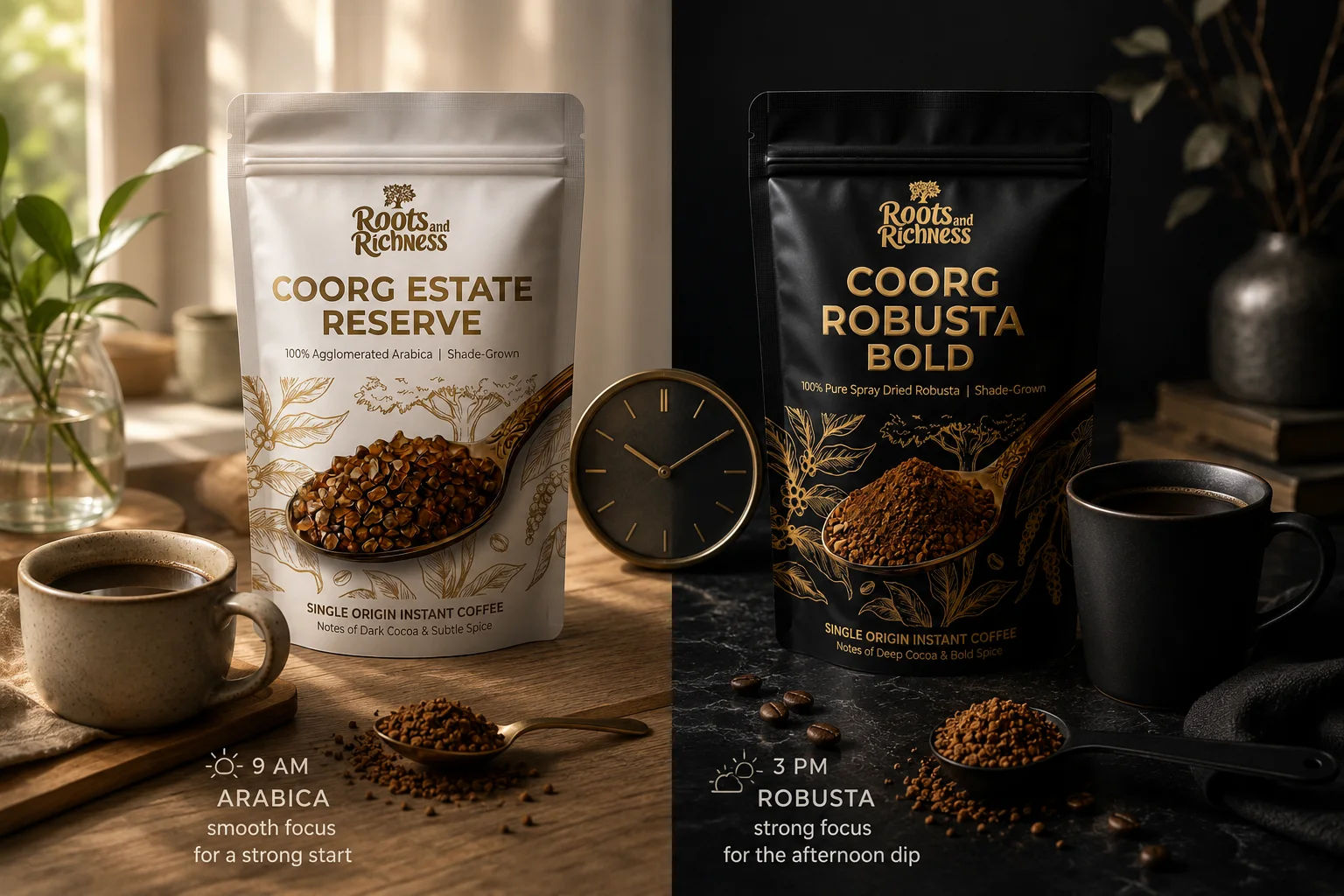
Morning (6–10 AM): a smooth, lower-acid Arabica — easier on an empty stomach, clean focus without overstimulation.
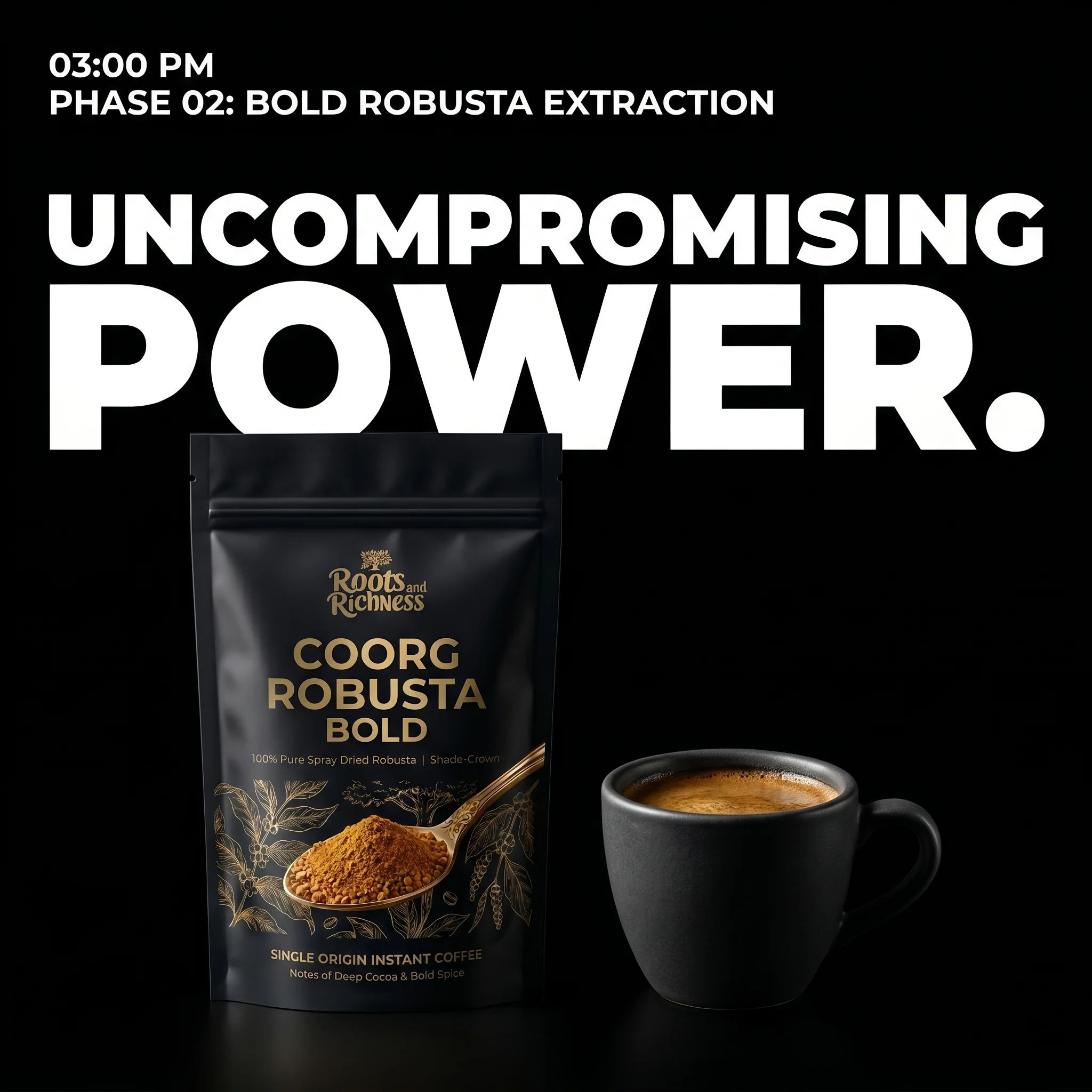
Afternoon (2–5 PM): a higher-caffeine Robusta, used deliberately in this window — precise enough to cut through the dip, cleared from your system well before bedtime.
This same logic is also why chicory-free coffee matters more once you're being deliberate about timing — with fillers in the mix, it's harder to know how much actual caffeine you're getting per cup. We covered that in more detail in why Indian instant coffee tastes bitter, if you haven't checked your own tin's label yet.
Two beans, one system: the AM/PM Protocol
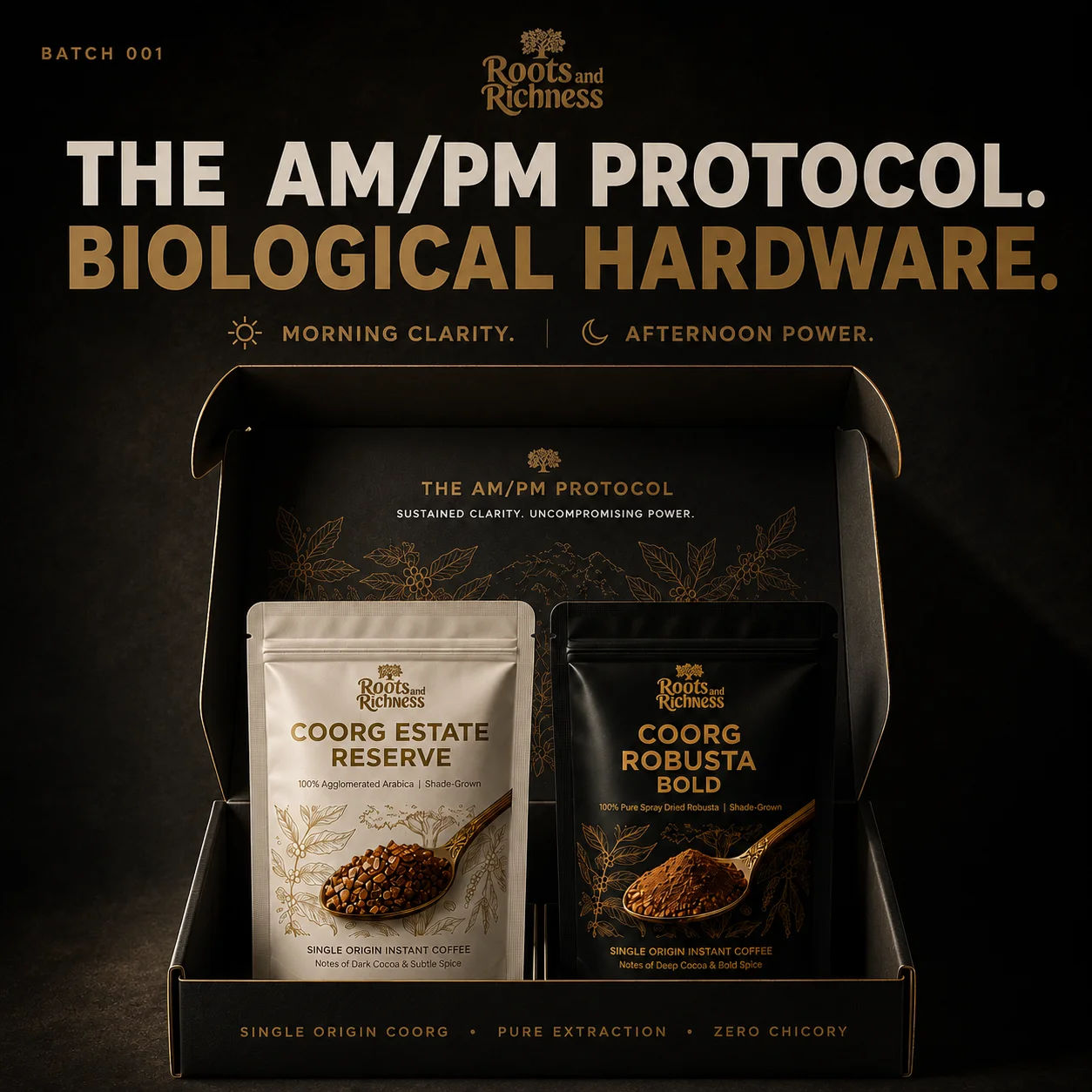
This is the exact logic behind the AM/PM Protocol — a 9 AM Arabica pouch and a 3 PM Robusta pouch, both 100% single-origin Coorg coffee with zero chicory, so the only variable that changes across your day is the one that should: caffeine dose and bean, timed on purpose.
At ₹799 for 50 cups, that's ₹16 a cup for two beans matched to two parts of your day — instead of one tin doing an imprecise job of both.
93 of 100 units in this batch are already gone. It's roasted and packed in small batches out of Coorg, so once this run sells out, the next isn't ready for 3–4 weeks.
Frequently Asked Questions
Is Robusta stronger than Arabica? Yes. Robusta beans contain roughly double the caffeine of Arabica beans, along with a more bitter, fuller-bodied flavor.
Can I drink Robusta coffee in the afternoon without affecting sleep? Caffeine has a half-life of roughly 5–6 hours. A Robusta coffee consumed between 2–5 PM will have largely cleared the system before bedtime for most people, though caffeine-sensitive individuals should avoid it after 5 PM.
Why does my afternoon coffee feel less effective than my morning one? If the same lower-caffeine bean, typically Arabica, is used both morning and afternoon, it may not deliver enough caffeine to counteract the natural afternoon dip in cortisol, making the second cup feel less effective.
Does the AM/PM Protocol use Arabica or Robusta? Both — a single-origin Coorg Arabica pouch for the morning and a single-origin Coorg Robusta pouch for the afternoon, timed to match each bean's caffeine profile to the part of the day it suits.
Ready to stop drinking the same coffee twice a day? Get the AM/PM Protocol — ₹799 for 50 cups · Free shipping · 7-day refund guarantee · 7 units left in this batch
Did You Know?
Robusta plants are hardier and easier to grow at lower altitudes, which is part of why it's cheaper — not because it's lower quality.
Did You Know?
Espresso blends worldwide often include some Robusta specifically for its crema and caffeine punch, not just cost.
Still Deciding?
Which Coffee Is Right for You?
Morning Person
AM · 100% Arabica
Low acidity, smooth on an empty stomach, gentle caffeine for a clear-headed start.
Shop AM ArabicaNeed an Afternoon Lift
PM · 100% Robusta
Nearly double the caffeine of Arabica — built for the 2–5 PM slump, clears before bed.
Shop PM RobustaCan't decide? Get both in the AM/PM Protocol →
Built Around This Exact Idea
Two Beans, Timed to When You Actually Need Them
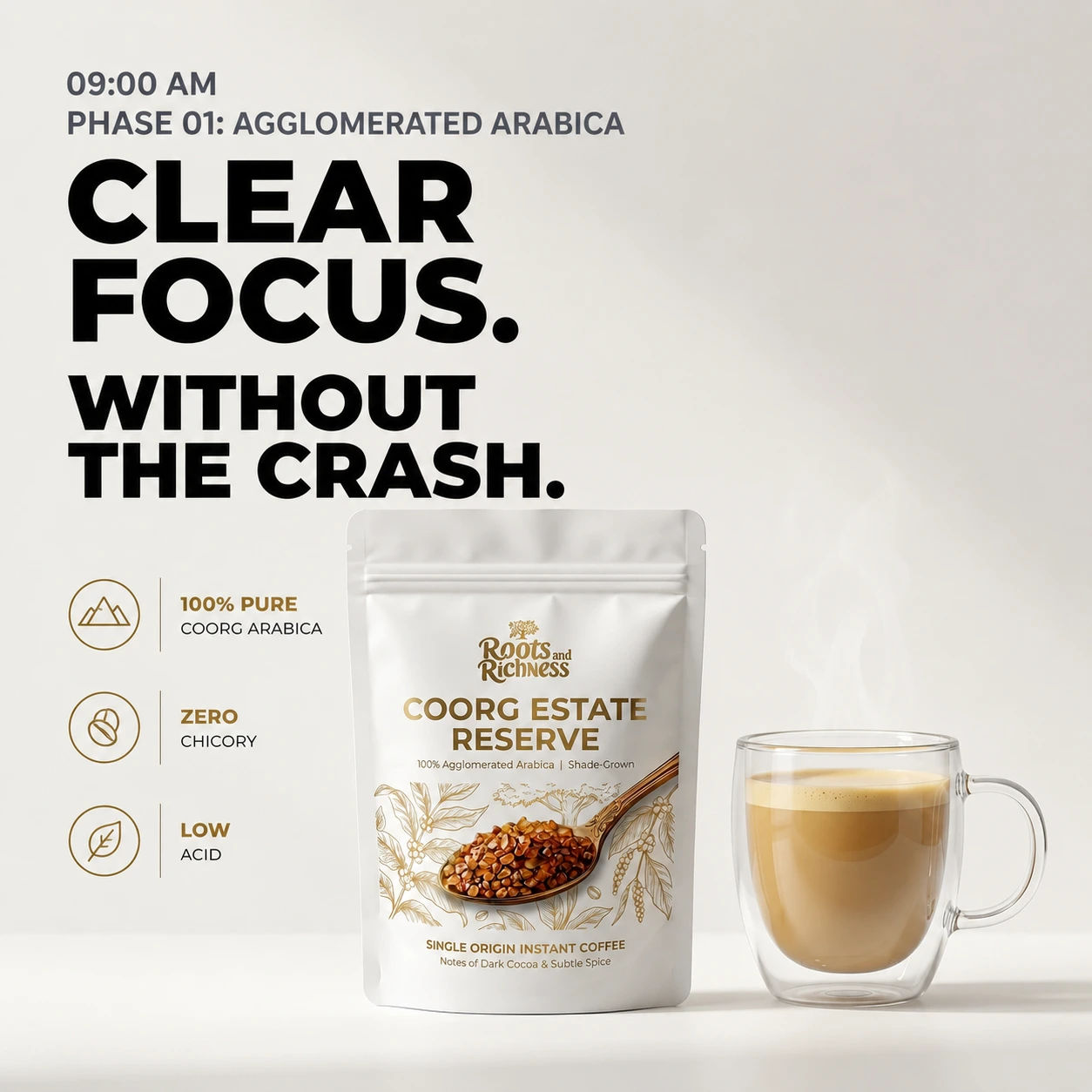
The AM/PM Protocol pairs single-origin Coorg Arabica for mornings with Robusta for the afternoon — the same science, already bottled.
A few things people usually ask before switching.
Frequently Asked Questions
Is Robusta stronger than Arabica?
Yes. Robusta beans contain roughly double the caffeine of Arabica beans, along with a more bitter, fuller-bodied flavor.
Can I drink Robusta coffee in the afternoon without affecting sleep?
Caffeine has a half-life of roughly 5-6 hours. A Robusta coffee consumed between 2-5 PM will have largely cleared the system before bedtime for most people, though caffeine-sensitive individuals should avoid it after 5 PM.
Why does my afternoon coffee feel less effective than my morning one?
If the same lower-caffeine bean (typically Arabica) is used both morning and afternoon, it may not deliver enough caffeine to counteract the natural afternoon dip in cortisol, making the second cup feel less effective.
Does the AM/PM Protocol use Arabica or Robusta?
Both — a single-origin Coorg Arabica pouch for the morning and a single-origin Coorg Robusta pouch for the afternoon, timed to match each bean's caffeine profile to the part of the day it suits.
Featured Products Mentioned in This Article
Experience the premium wood-pressed oils we discussed in this article. Each product is traditionally processed and sourced directly from farmers.