Is Single-Origin Coffee Worth It? Single-Origin vs Blend, Explained
Quick Answer
Is single-origin coffee worth it? Here's the real difference between single-origin and blended coffee, and why the label only matters when it's verifiable.
Reviewed by the Roots & Richness founder, who sources the AM/PM Protocol directly from Coorg coffee estates. Last updated August 2026.
Quick Answers
What's the difference between single-origin and blended coffee? Single-origin coffee comes from one specific farm, estate, or region, so its flavor reflects that one place. Blended coffee mixes beans from multiple origins, usually to create a consistent flavor year-round.
Is single-origin coffee worth it, or is it just a blend at a higher price? Single-origin coffee is worth the price when the brand actually discloses the specific farm or estate — that traceability is what you're paying for. If a "single-origin" label offers no more detail than a blend claim would, it isn't worth a premium over a well-made blend.
Single origin vs blend — which is better? Neither single-origin nor blended coffee is objectively better; each solves a different problem. Single-origin delivers a traceable, distinct flavor tied to one place. Blended coffee delivers a consistent, repeatable flavor by combining beans from multiple origins.
Is "single-origin" just a marketing term? "Single-origin" is a marketing term only when it isn't backed by a specific, disclosed estate or region. When a brand names the exact farm and region, single-origin becomes a verifiable fact, not just a label.
Why do coffee roasters make blends if single-origin is more traceable? Coffee roasters make blends because a single origin's flavor can shift slightly from one harvest to the next, and blending multiple origins together lets a roaster smooth out that seasonal variation into a consistent, repeatable cup.
Does single-origin coffee taste better than a blend? Single-origin coffee tastes more distinct, with brighter flavor notes tied to its specific growing region, while blended coffee tends to taste more balanced and rounded — "better" depends on which profile you prefer, not which type of coffee it is.
Single-Origin vs Blend — At a Glance
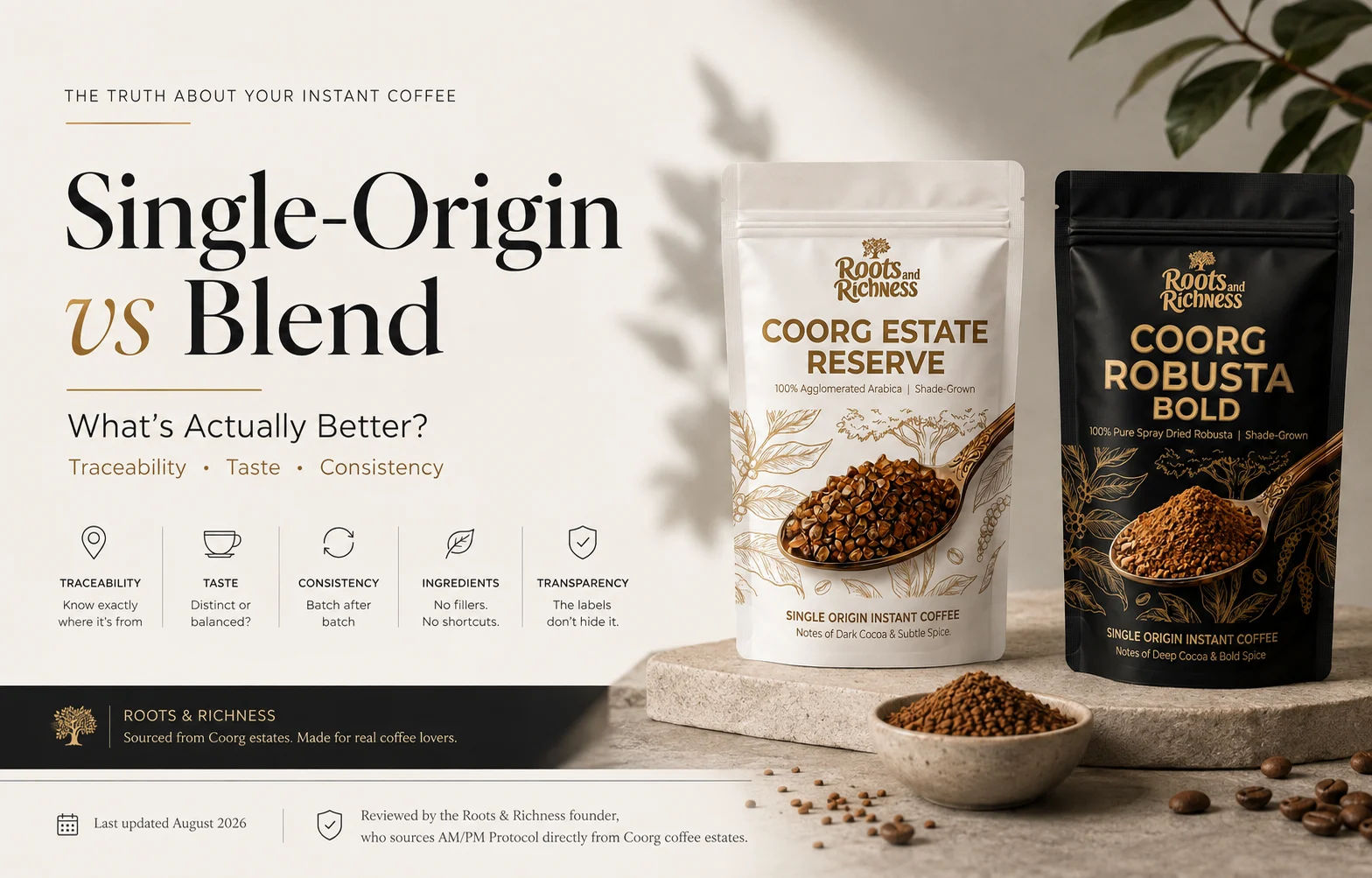
Single-OriginBlendSourceOne farm, estate, or regionMultiple origins mixed togetherTraceabilityHigh — can be traced to a specific estateLow — usually only a country is disclosed, if thatFlavor consistency batch to batchCan shift slightly by season/harvestMore consistent, since the mix can be adjustedFlavor characterDistinct, brighter, tied to one regionBalanced, rounded, built for a target profileBest forKnowing exactly what you're drinking and where it's fromA dependable, familiar everyday cup
The Full Story
"Single-origin" gets printed on a lot of coffee packaging, and it's fair to be skeptical of it — plenty of brands use the term as a price justification without backing it up with anything you can actually verify.
The part most single-origin-vs-blend articles skip: what "blend" actually hides
Most coverage of this topic treats it as a pure flavor-preference question — bright and distinct versus balanced and consistent. That's true for specialty roasted beans and pour-over coffee. But it misses something specific to instant coffee: a "blend" claim on an instant coffee tin can mean almost anything, because there's usually no obligation to disclose which regions, or how much of each, went into it. That ambiguity is exactly the space where a non-coffee filler like chicory gets quietly introduced without changing how the product is marketed. A verifiable single-origin claim — one estate, one region, disclosed — removes that ambiguity entirely, because there's no room in the story for an unnamed second ingredient to hide in.
What single-origin actually means
Single-origin coffee comes from one specific place — ideally traceable down to a farm or estate, not just a country. That traceability is the entire point. When a brand can tell you the estate, the region, and the harvest, you know exactly what's in the bag. When a brand just prints "single-origin" with no further detail, the label isn't giving you anything a blend claim couldn't also give you.
What a blend actually means
A blend is a mix of beans from more than one origin, combined by a roaster to hit a specific, repeatable flavor profile. This isn't a lesser product — it's solving a real problem. A single origin's flavor can shift slightly from one harvest to the next, since it's tied to one place's weather and growing conditions that year. Blending lets a roaster smooth that variation out, which is part of why blends are so common as the "house" or espresso coffee at cafés — they need to taste the same in December as they did in June.
So which one is actually better?
Neither, in the abstract. It depends what you're optimizing for. If you want a distinct, traceable cup where you know precisely where your coffee came from, single-origin is the right call — but only if the brand actually discloses the estate, not just a country name. If you want a dependable, familiar cup that won't shift on you, a well-made blend does that job well.
Why the AM/PM Protocol is built as single-origin, not a blend
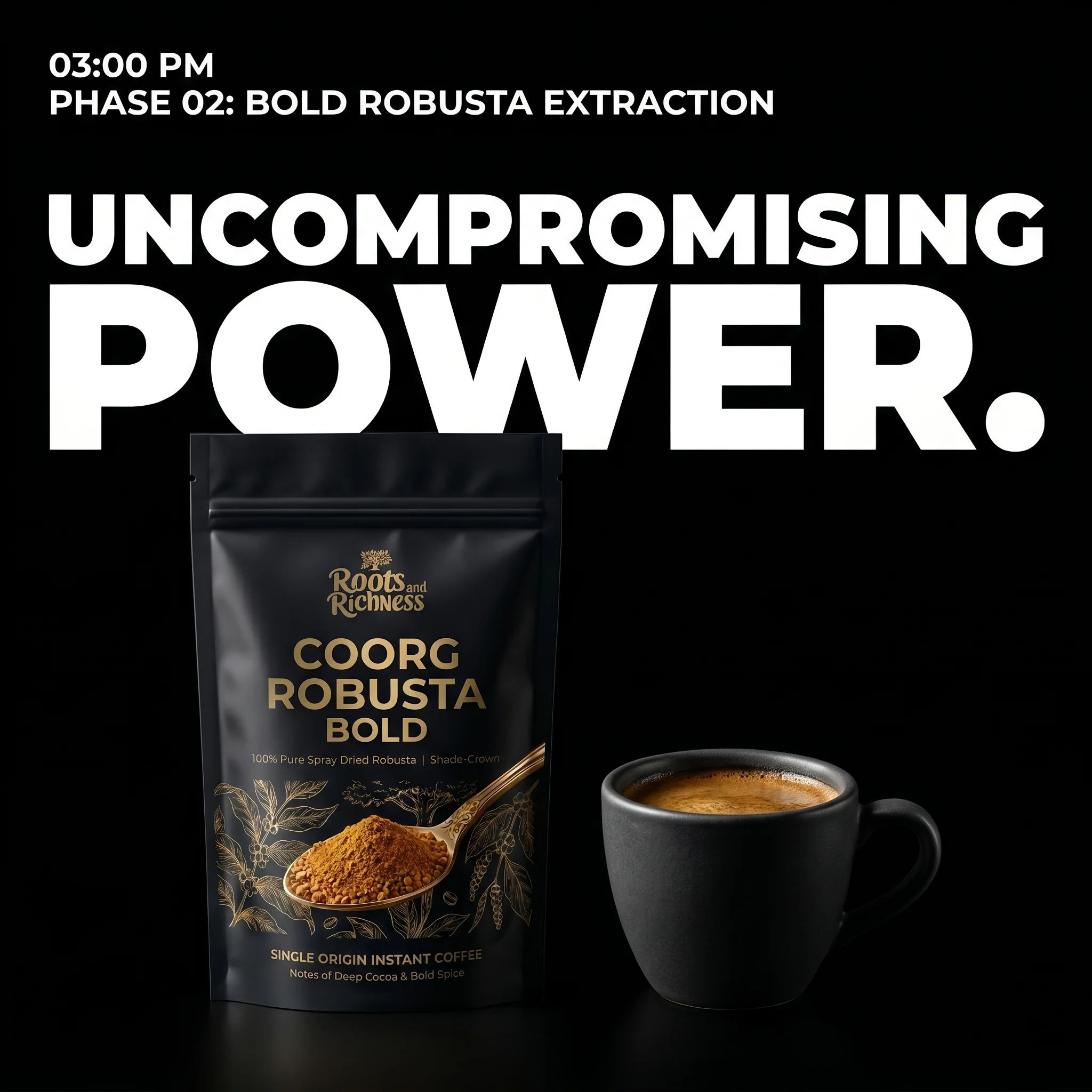
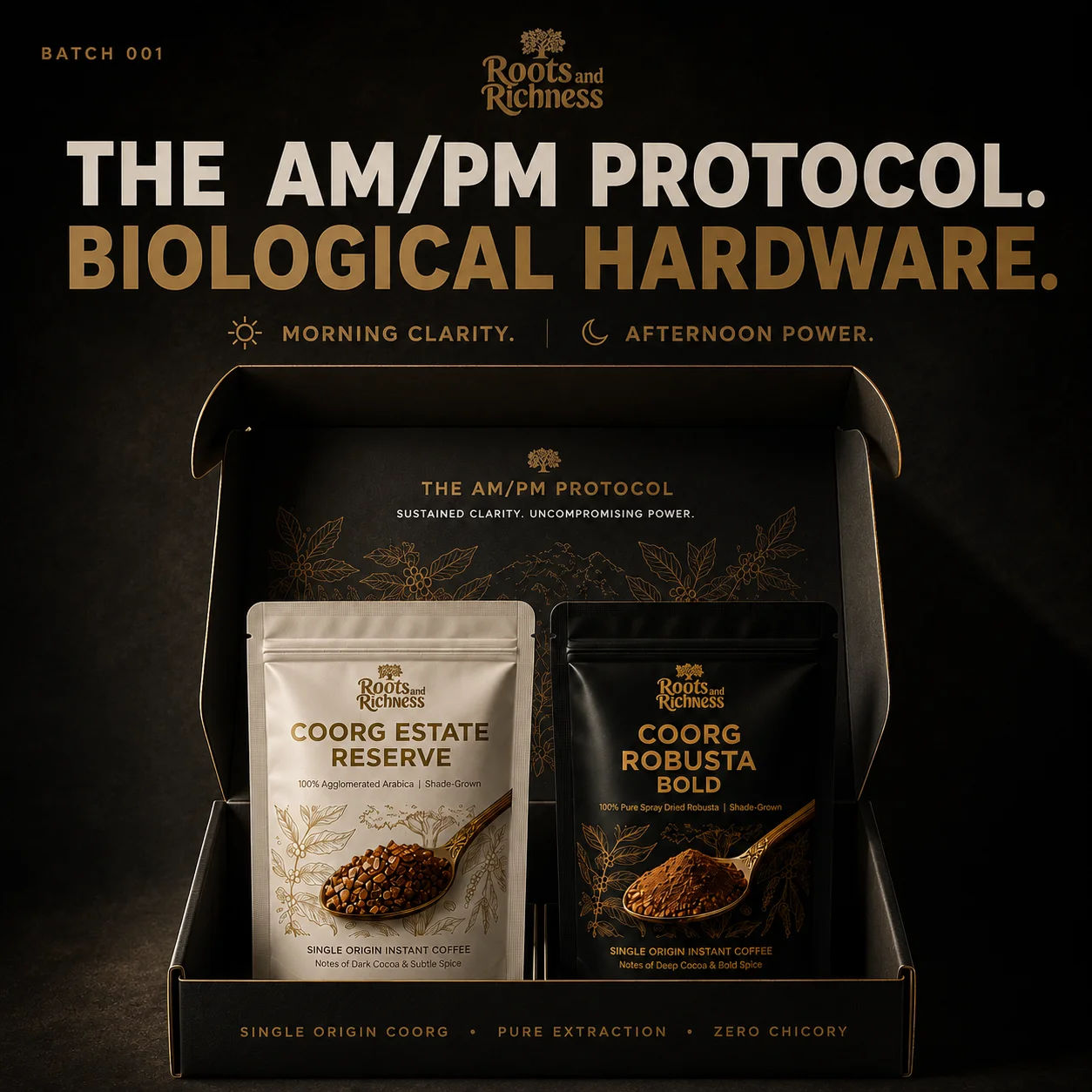
Both pouches in the AM/PM Protocol — the Arabica and the Robusta — are sourced from Coorg estates specifically, not blended across regions or countries. That's a deliberate choice, not a marketing add-on: it means the ingredient list stays exactly "coffee," with no room for a cheaper filler or an unnamed second origin to get folded in along the way. You're not just getting "single-origin" as a word on the pouch — you're getting two specific beans matched deliberately to two parts of your day, both traceable back to where they were actually grown.
At ₹799 for 50 cups, that's ₹16 a cup for coffee you can trace back to a specific growing region — not a blend where the label tells you less than you'd think.
96 of 100 units in this batch are already gone. It's roasted and packed in small batches out of Coorg, so once this run sells out, the next isn't ready for 3–4 weeks.
Frequently Asked Questions
Is single-origin coffee worth paying more for? Single-origin coffee is worth paying more for when the brand discloses the specific estate or region, since that's the traceability you're paying a premium for. It isn't worth a premium if the label offers no more detail than a blend would.
Is the AM/PM Protocol a blend or single-origin? The AM/PM Protocol is single-origin — both the Arabica (AM) and Robusta (PM) pouches are sourced from Coorg estates specifically, not blended across regions.
Do blends always contain fillers like chicory? Blends do not always contain chicory — a blend simply means beans from more than one coffee origin are mixed together. Chicory is a separate, non-coffee filler that's sometimes added on top of either a blend or a single-origin base to cut cost, so it's worth checking the ingredients list specifically for the word "chicory" rather than assuming from the blend/single-origin label alone.
Ready to taste coffee you can actually trace? Get the AM/PM Protocol — ₹799 for 50 cups · Free shipping · 7-day refund guarantee · 7 units left in this batch
Still Deciding?
Which Coffee Is Right for You?
Morning Person
AM · 100% Arabica
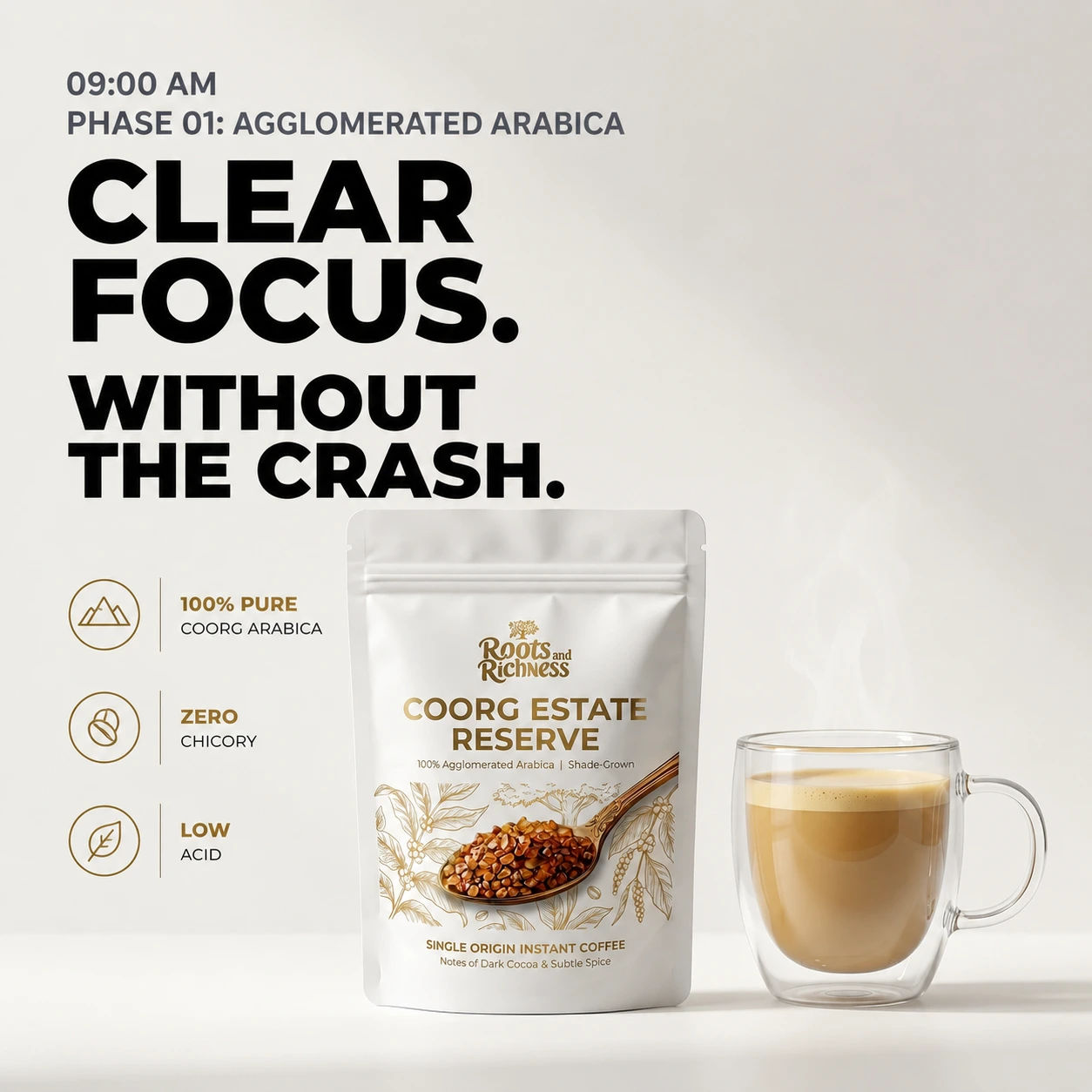
Low acidity, smooth on an empty stomach, gentle caffeine for a clear-headed start.
Shop AM ArabicaNeed an Afternoon Lift
PM · 100% Robusta
Nearly double the caffeine of Arabica — built for the 2–5 PM slump, clears before bed.
Shop PM RobustaCan't decide? Get both in the AM/PM Protocol →
From This Article to Your Cup
Pure Coorg Coffee, Zero Chicory — See for Yourself
Everything above is exactly why we built the AM/PM Protocol: single-origin, chicory-free, lab-tested every batch.
A few things people usually ask before switching.
Frequently Asked Questions
What's the difference between single-origin and blended coffee?
Single-origin coffee comes from one specific farm, estate, or region, so its flavor reflects that one place. Blended coffee mixes beans from multiple origins, usually to create a consistent flavor year-round.
Is single-origin coffee actually better than a blend?
Not objectively — it depends on what you want. Single-origin gives you a traceable, distinct flavor tied to one place. Blends give you consistency, since a roaster can adjust the mix if one origin's harvest changes. Neither is inherently better; they solve different problems.
Is 'single-origin' just a marketing term?
Not when it's verifiable. The label is only meaningful if the brand can trace the coffee to a specific farm or estate. If a brand can't say which estate or region the beans came from, 'single-origin' is doing marketing work, not informational work.
Why do coffee roasters make blends if single-origin is more traceable?
Blends solve a real problem: single-origin flavor shifts slightly season to season, since it's tied to one place's harvest. Blending lets a roaster smooth that out and deliver a consistent cup year-round.
Is the AM/PM Protocol a blend or single-origin?
Single-origin. Both the Arabica (AM) and Robusta (PM) pouches are sourced from Coorg estates specifically, not blended across regions.
Do blends always contain fillers like chicory?
No — a blend just means beans from more than one coffee origin are mixed together. Chicory is a separate, non-coffee filler sometimes added on top of either a blend or a single-origin base to cut cost. Check the ingredients list specifically for 'chicory,' not just whether the coffee is labeled a blend.
Featured Products Mentioned in This Article
Experience the premium wood-pressed oils we discussed in this article. Each product is traditionally processed and sourced directly from farmers.