Is Robusta Coffee Actually Lower Quality Than Arabica? (No — Here's the Real Difference)
Quick Answer
Is Robusta coffee lower quality than Arabica? No — here's the real difference between the two beans, and why Robusta is the right choice for afternoon coffee.
Key Takeaways
- Robusta isn't lower quality than Arabica — it's a different bean suited to different uses.
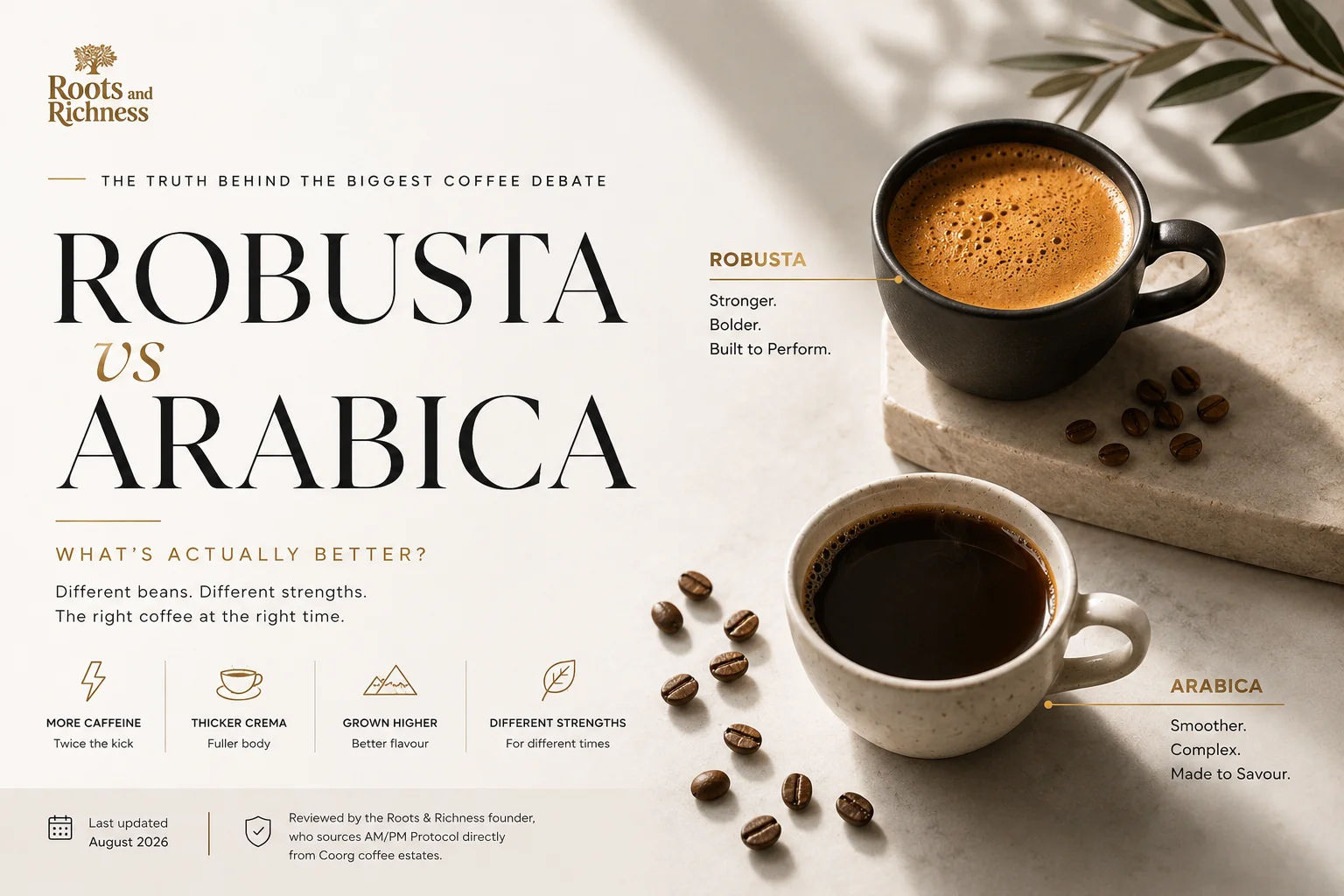
- Robusta contains roughly double the caffeine of Arabica, gram for gram.
- Many espresso blends include Robusta deliberately, for its crema and body — not as a cost shortcut.
- The "Robusta is worse" perception comes from cost and marketing history, not an inherent quality gap.
Arabica and Robusta — Different Strengths, Not Better/Worse
| Attribute | Arabica | Robusta |
|---|---|---|
| Caffeine content | Lower | Roughly 2x Arabica |
| Growing conditions | High altitude, harder to grow | Lower altitude, hardier plant |
| Flavor character | Smoother, more complex, low acidity | Fuller body, more bitterness raw |
| Best used for | Sipping black, morning cups | Espresso crema, afternoon caffeine, heat-stable processing |
Quick Answers
Is Robusta coffee lower quality than Arabica? No. Robusta isn't lower quality than Arabica — it's a different bean with different strengths, including roughly double Arabica's caffeine and better heat stability. The perception that Robusta is inferior comes from its lower cost and its association with cheap blends, not an inherent quality gap.
Why is Robusta coffee cheaper than Arabica? Robusta plants are hardier, grow at lower altitudes, and yield more coffee per plant than Arabica, which makes it cheaper to produce. Lower cost isn't the same as lower quality — it reflects easier cultivation, not inferior beans.
Why do espresso blends include Robusta? Many espresso blends include Robusta deliberately for its thicker, longer-lasting crema and fuller body, which Arabica alone doesn't produce to the same degree. It's a flavor and texture choice, not a cost-cutting shortcut.
Is Robusta or Arabica better for afternoon coffee? Robusta is generally better suited to afternoon coffee, since it contains roughly double the caffeine of Arabica and can more effectively counteract the natural afternoon dip in alertness.
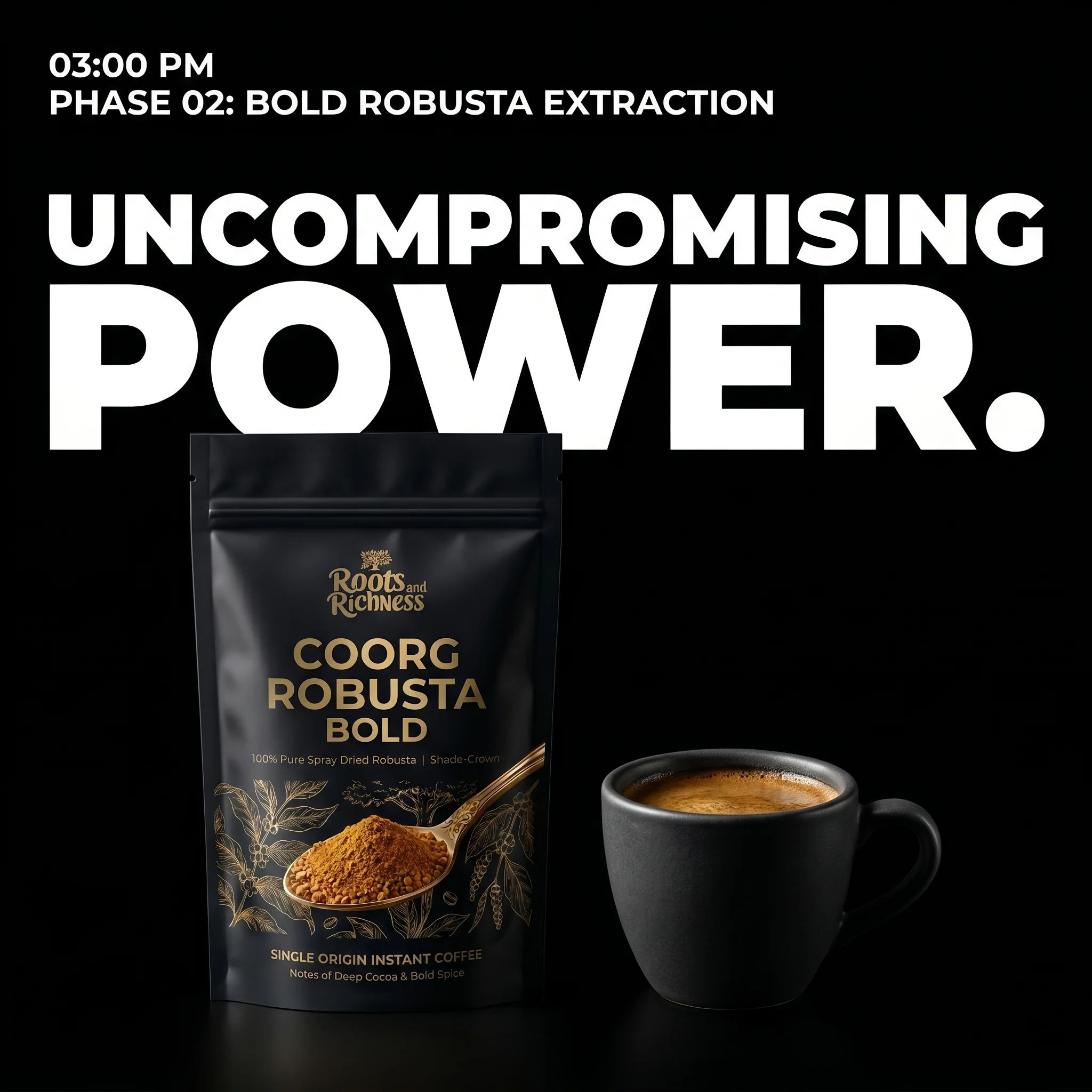
Does the AM/PM Protocol use Robusta because it's cheaper? No. The AM/PM Protocol's PM pouch uses single-origin Coorg Robusta specifically because of its higher caffeine content, which suits the afternoon slot it's designed for — not as a cost-cutting substitute for Arabica.
Arabica and Robusta — Different Strengths, Not Better/Worse
| Arabica | Robusta | |
|---|---|---|
| Caffeine content | Lower | Roughly 2x Arabica |
| Growing conditions | High altitude, harder to grow | Lower altitude, hardier plant |
| Flavor character | Smoother, more complex, low acidity | Fuller body, more bitterness raw |
| Best used for | Sipping black, morning cups | Espresso crema, afternoon caffeine, heat-stable processing |
The Full Story
Where the "Robusta is worse" idea comes from
Walk into most specialty cafés and you'll see Arabica front and center — on the bag, on the menu board, sometimes even in the shop's name. Robusta rarely gets top billing, and when it's mentioned at all, it's often as the bean used to bulk up a cheap blend. Over time, that pattern hardens into an assumption: Arabica is the "good" bean, Robusta is the compromise.
That assumption is about economics and marketing history, not inherent quality. Arabica plants are harder to grow — they need higher altitudes, cooler temperatures, and more careful cultivation, which makes them costlier to produce. Robusta plants are hardier, grow at lower altitudes, and yield more per plant, which makes them cheaper. Cheaper inputs get used in cheaper products more often, and over a few decades that correlation calcified into a quality hierarchy that isn't really about the bean itself.
What Robusta is actually good at
Robusta isn't a lesser version of Arabica — it's a different bean with different strengths, and dismissing it outright means missing what it's genuinely better at.
Caffeine. Robusta contains roughly double the caffeine of Arabica, gram for gram. If what you want from a cup is alertness — not just flavor — Robusta is doing more work per cup than Arabica is.
Crema and body. Espresso blends worldwide, including plenty from well-regarded European roasters, include a portion of Robusta specifically because it produces a thicker, longer-lasting crema and a fuller body than Arabica alone. This isn't a cost-cutting compromise in those blends — it's a deliberate flavor and texture decision.
Consistency under heat. Robusta holds up better to hotter brewing and processing conditions without losing its character the way a more delicate Arabica bean can. That resilience is part of why it performs well in contexts where precision brewing isn't realistic — including instant coffee.
What Arabica is actually good at
None of this makes Arabica the "worse" bean either — it has its own genuine strengths. Arabica has more sugar and lipid content, which typically translates into a smoother, more complex flavor with less bitterness. It's lower in acidity in a way that reads as "clean" rather than harsh, and it carries more of the fruity, floral, or nutty notes that specialty coffee tasting notes usually describe. For sipping black in the morning, on an empty stomach, Arabica's gentler profile usually wins.
The honest comparison isn't "which bean is better" — it's "which bean is better for what you're trying to do right now." A bean chosen for a 6 AM cup and a bean chosen for a 3 PM cup are solving different problems, and that's exactly why pairing each bean to the right part of your day works better than treating one as universally superior.
Why this bias is worth correcting
Believing Robusta is inherently inferior leads to two bad outcomes. First, it makes people distrust any product that uses Robusta deliberately, even when it's the right bean for the job — like an afternoon coffee that needs more caffeine, not more subtlety. Second, it lets genuinely low-quality Robusta (badly processed, over-roasted, blended with actual fillers like chicory to hide flaws) get lumped in with well-sourced, well-processed Robusta that has nothing to hide. The bean isn't the problem in either case — sourcing and processing are.
A well-sourced, single-origin Robusta, roasted properly and used at the right time of day, isn't a downgrade from Arabica. It's a different tool, chosen on purpose.
A single-origin Robusta, chosen on purpose: the AM/PM Protocol
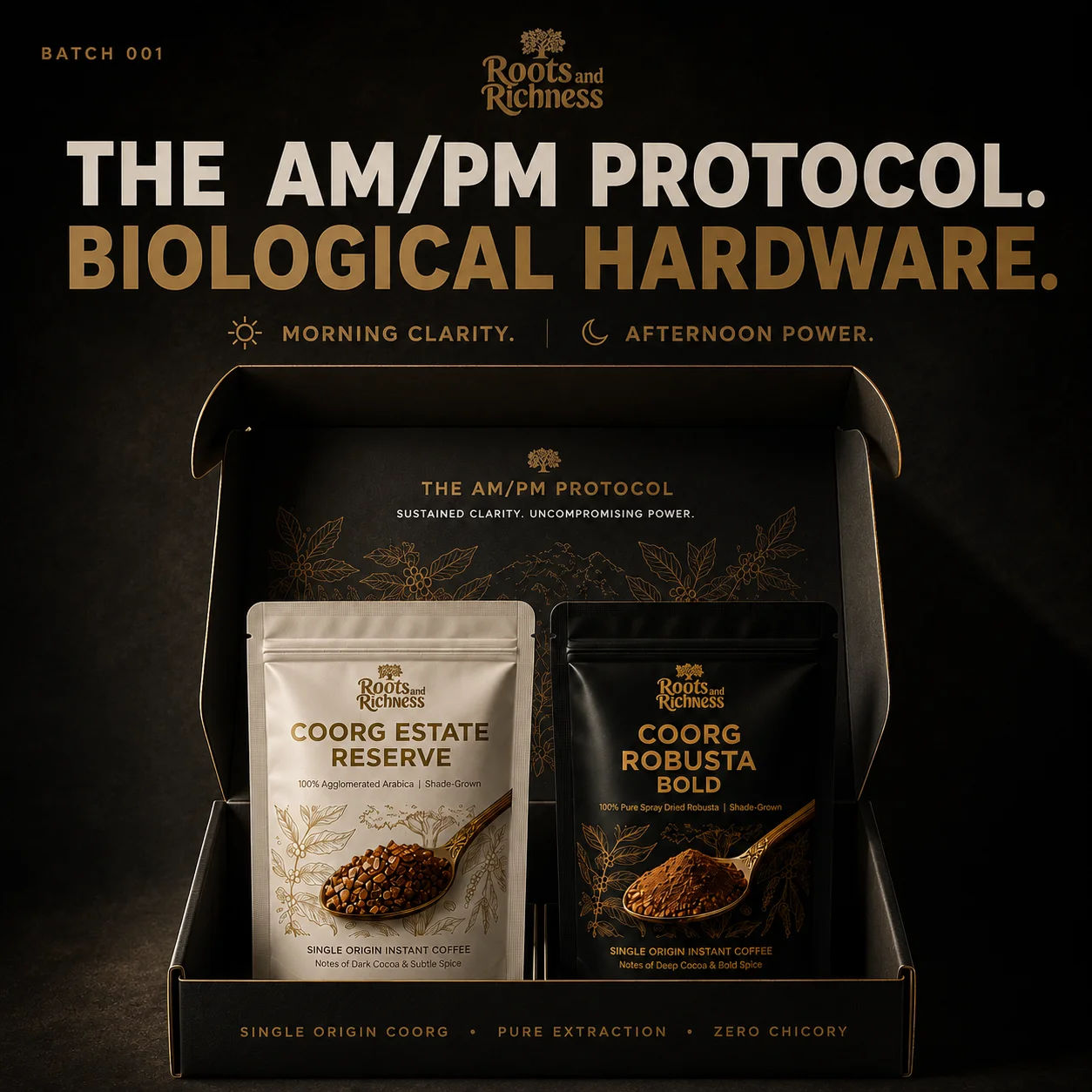
The PM pouch in the AM/PM Protocol is 100% single-origin Coorg Robusta — sourced and roasted for the afternoon slot it's built for, not used to cut cost. It's paired with a single-origin Coorg Arabica for the morning, so each bean is doing the job it's actually good at, not standing in as a cheaper substitute for the other.
At ₹799 for 50 cups, that's ₹16 a cup for two beans chosen for what they each do best — not one bean treated as universally "better" than the other.
93 of 100 units in this batch are already gone. It's roasted and packed in small batches out of Coorg, so once this run sells out, the next isn't ready for 3–4 weeks.
Frequently Asked Questions
Is Robusta coffee lower quality than Arabica? No. Robusta isn't lower quality than Arabica — it's a different bean with different strengths. The perception that it's inferior comes from its lower cost and its association with cheap blends, not an inherent quality gap.
Why is Robusta coffee cheaper than Arabica? Robusta plants are hardier, grow at lower altitudes, and yield more coffee per plant, which makes it cheaper to produce — a reflection of easier cultivation, not inferior beans.
Why do espresso blends include Robusta? Many espresso blends include Robusta deliberately for its thicker, longer-lasting crema and fuller body — a flavor and texture choice, not a cost-cutting shortcut.
Does the AM/PM Protocol use Robusta because it's cheaper? No. The AM/PM Protocol's PM pouch uses single-origin Coorg Robusta specifically for its higher caffeine content, suited to the afternoon slot it's designed for — not as a cost-cutting substitute for Arabica.
Ready to try a Robusta chosen on purpose, not on price? Get the AM/PM Protocol — ₹799 for 50 cups · Free shipping · 7-day refund guarantee · 7 units left in this batch
Did You Know?
Robusta plants can yield significantly more coffee per hectare than Arabica, which is the real reason it costs less — not a difference in inherent quality.
Did You Know?
Some of the world's most respected Italian espresso blends include 10-30% Robusta specifically for crema and body, not as a filler.
Still Deciding?
Which Coffee Is Right for You?
Morning Person
AM · 100% Arabica
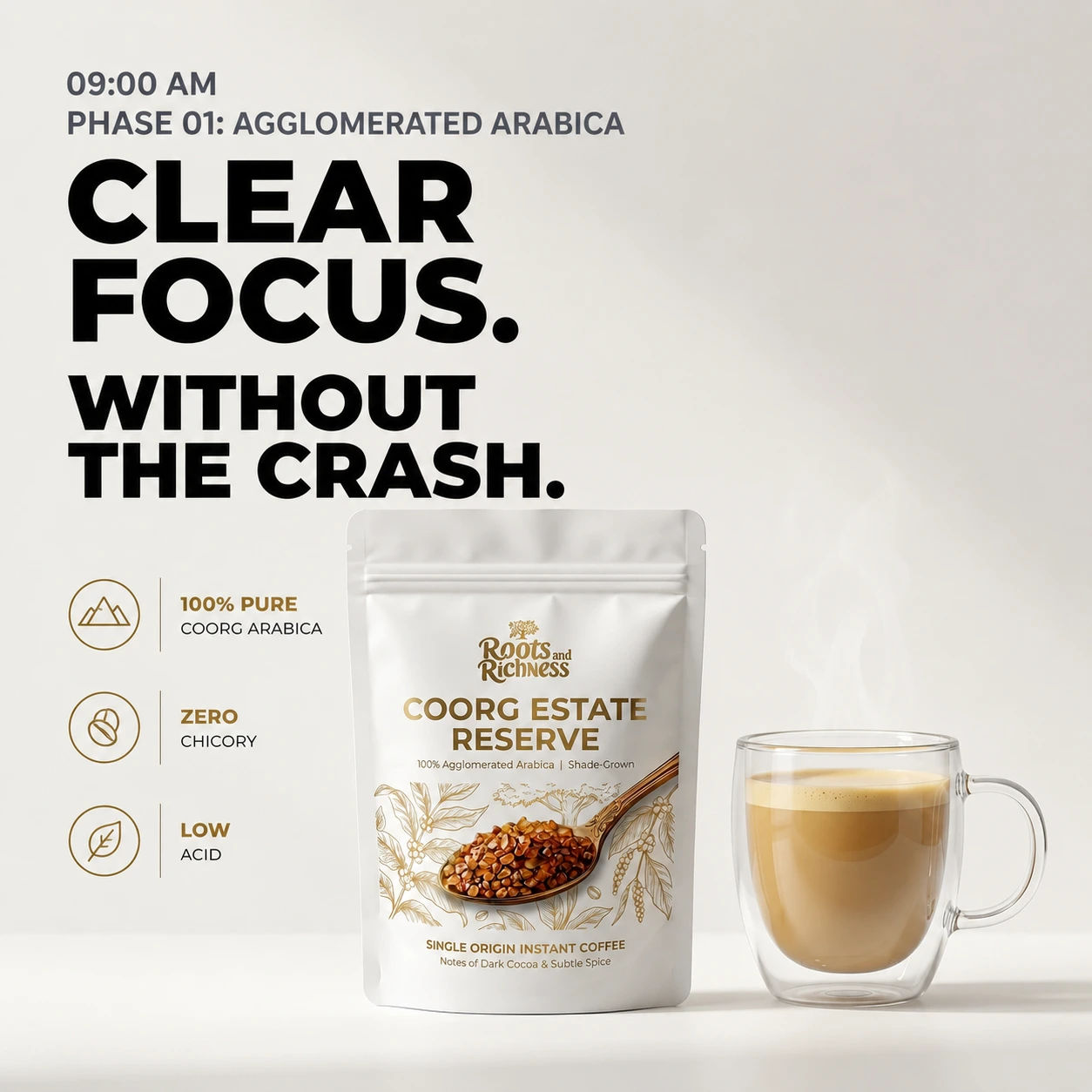
Low acidity, smooth on an empty stomach, gentle caffeine for a clear-headed start.
Shop AM ArabicaNeed an Afternoon Lift
PM · 100% Robusta
Nearly double the caffeine of Arabica — built for the 2–5 PM slump, clears before bed.
Shop PM RobustaCan't decide? Get both in the AM/PM Protocol →
Robusta, Done Right
A Single-Origin Robusta, Chosen on Purpose
The PM pouch in the AM/PM Protocol is 100% single-origin Coorg Robusta — sourced and roasted for the afternoon slot it's built for, not used to cut cost.
A few things people usually ask before switching.
Frequently Asked Questions
Is Robusta coffee lower quality than Arabica?
No. Robusta isn't lower quality than Arabica — it's a different bean with different strengths, including roughly double Arabica's caffeine and better heat stability. The perception that Robusta is inferior comes from its lower cost and its association with cheap blends, not an inherent quality gap.
Why is Robusta coffee cheaper than Arabica?
Robusta plants are hardier, grow at lower altitudes, and yield more coffee per plant than Arabica, which makes it cheaper to produce. Lower cost isn't the same as lower quality — it reflects easier cultivation, not inferior beans.
Why do espresso blends include Robusta?
Many espresso blends include Robusta deliberately for its thicker, longer-lasting crema and fuller body, which Arabica alone doesn't produce to the same degree. It's a flavor and texture choice, not a cost-cutting shortcut.
Is Robusta or Arabica better for afternoon coffee?
Robusta is generally better suited to afternoon coffee, since it contains roughly double the caffeine of Arabica and can more effectively counteract the natural afternoon dip in alertness.
Does the AM/PM Protocol use Robusta because it's cheaper?
No. The AM/PM Protocol's PM pouch uses single-origin Coorg Robusta specifically because of its higher caffeine content, which suits the afternoon slot it's designed for — not as a cost-cutting substitute for Arabica.
Featured Products Mentioned in This Article
Experience the premium wood-pressed oils we discussed in this article. Each product is traditionally processed and sourced directly from farmers.