Chicory in Coffee: Good or Bad? The Honest Answer for Filter Coffee and Instant Coffee Drinkers

Quick Answer
Is chicory in coffee good or bad? For filter coffee it’s a tradition, for instant coffee it’s often a cost-cutter. Here’s the honest difference and how to check your label.
Key Takeaways
- Chicory in South Indian filter coffee is usually a deliberate, traditional choice for body and color.
- In instant coffee, chicory is often there mainly because it costs less than coffee.
- Chicory has no caffeine, so chicory-blended coffee gives less caffeine per spoon.
- There is no strong evidence chicory coffee is healthier than regular coffee; some people are allergic.
Chicory in Filter Coffee vs Instant Coffee vs Pure Coffee
| Attribute | Filter Coffee Blend | Chicory Instant Coffee | 100% Pure Instant |
|---|---|---|---|
| Why chicory is there | Body, color, rounder taste | Often cost | Not present |
| How visible it is | Sold openly as a blend | Small print on the label | Ingredient list reads coffee |
| Caffeine per spoon | Lower than pure | Lower than pure | Full strength |
| Taste | Thick, dark, caramel-like | Flatter, earthier | Cleaner, more aromatic |
Reviewed by the Roots & Richness founder, who sources the AM/PM Protocol directly from Kushalnagar, Coorg. Last updated November 2026.
Quick Answers
Is chicory in coffee good or bad? Chicory in coffee is neither inherently good nor bad. It is a safe, traditional food ingredient, and many South Indian filter coffee drinkers choose it on purpose for body and color. It becomes a problem only when it is added to coffee without you knowing, as a cheaper substitute for the coffee itself.
Why do South Indians put chicory in filter coffee? Chicory is blended into South Indian filter coffee because it makes the decoction thicker and darker and adds a slightly bitter, caramel-like depth that many people prefer with milk. It is part of regional coffee tradition, usually sold as a named coffee-chicory blend.
Is chicory healthier than coffee? There is no strong evidence that chicory coffee is healthier than regular coffee. Chicory root contains inulin, a prebiotic fiber, but the amount that ends up in a cup is small. Chicory also has no caffeine, so it cannot replace what coffee does for alertness.
Is chicory safe to drink every day? Chicory is considered safe for most people in the amounts found in coffee blends. Some people are allergic to it, and research on its safety during pregnancy and breastfeeding is limited, so anyone pregnant, breastfeeding, or managing a health condition should check with their doctor.
Is chicory in instant coffee the same as chicory in filter coffee? They are different situations. In filter coffee, chicory is usually a deliberate, named part of the blend. In instant coffee, it is often present mainly because it costs less than coffee, and many buyers never notice it on the label.
How do I avoid chicory in coffee? Read the ingredients list. Indian packaged food labels list ingredients in descending order of quantity, so "coffee, chicory" means a blend, while "coffee" alone means no chicory.
Three Different Cups: Chicory in Filter Coffee, Instant Coffee, and Pure Coffee
| Filter Coffee Blend (with chicory) | Chicory-Blended Instant Coffee | 100% Pure Instant Coffee | |
|---|---|---|---|
| Why chicory is there | Chosen for body, color, and a rounder taste with milk | Often cost: chicory is cheaper than coffee | Not present |
| How visible is it | Usually sold openly as a coffee-chicory blend | Listed in small print; many buyers never check | Ingredient list reads "coffee" |
| Caffeine per spoon | Lower than pure coffee, since chicory adds none | Lower than pure coffee, for the same reason | Full coffee caffeine, nothing diluting it |
| Taste | Thick, dark, slightly bitter and caramel-like | Flatter and earthier | Cleaner, more aromatic |
| Best for | Traditional milky filter coffee | People who do not mind the trade-off | People who want to taste the coffee itself |
The Full Story
Ask ten coffee drinkers in India about chicory and you will get two very different reactions. For many South Indians, a cup without chicory simply does not taste like home. For a growing number of instant coffee buyers, finding chicory on the label feels like finding out they were paying coffee prices for something else. Both reactions make sense, because they are talking about two different things.
What chicory is, and where the habit came from
Chicory is a root related to endive. It is roasted and ground into a dark powder that tastes bitter and slightly sweet, and it contains no caffeine. Blending it into coffee began in Europe in the early 1800s, when coffee was scarce or expensive and a cheap roasted root could stretch it. Over time it found a lasting home in places like New Orleans and in South Indian filter coffee.
Why filter coffee drinkers defend it
In a South Indian filter coffee decoction, chicory is usually a deliberate choice. It gives the brew more body, a darker color, and a rounder, slightly caramel-like edge that holds up well against hot milk and sugar. People who grew up on this taste often find pure coffee thin or sharp by comparison. That preference is real, and it is not something to correct. If you love your coffee-chicory filter blend and you know it is a blend, there is nothing wrong with it.
Where chicory becomes a problem
The trouble starts in instant coffee. Here chicory is often there for a different reason: it costs less than coffee. A brand that mixes it in can fill each tin with less actual coffee without changing the shelf price, and many buyers never read the ingredients list closely enough to notice. Because chicory has no caffeine, a chicory-blended tin also gives you less caffeine per spoon than a pure coffee tin of the same size. The issue is not that chicory is dangerous. It is that you may be paying for coffee and getting part of something else without having chosen it.
We cover the instant coffee side in more detail in why Indian instant coffee tastes bitter.
Is chicory healthy?
Chicory root contains inulin, a type of fiber that feeds gut bacteria, and some small studies have looked at possible benefits. But the amount of chicory in a cup of coffee is small, and there is no strong evidence that chicory coffee is healthier than regular coffee. It is a safe ingredient for most people, though some people are allergic, and research is limited for people who are pregnant or breastfeeding. If that applies to you, ask your doctor rather than relying on general guidance.
How to decide what is right for you
The honest answer is that it depends on what you want from the cup. If you love the thick, dark, bittersweet taste of a traditional filter coffee and you know what is in it, choose the blend you enjoy. If you want to know that everything you are paying for is coffee, and you want the full caffeine in every spoon, check the label and choose a product whose ingredients list reads only "coffee." The one outcome worth avoiding is the one where you did not know.
If you want pure coffee: the AM/PM Protocol
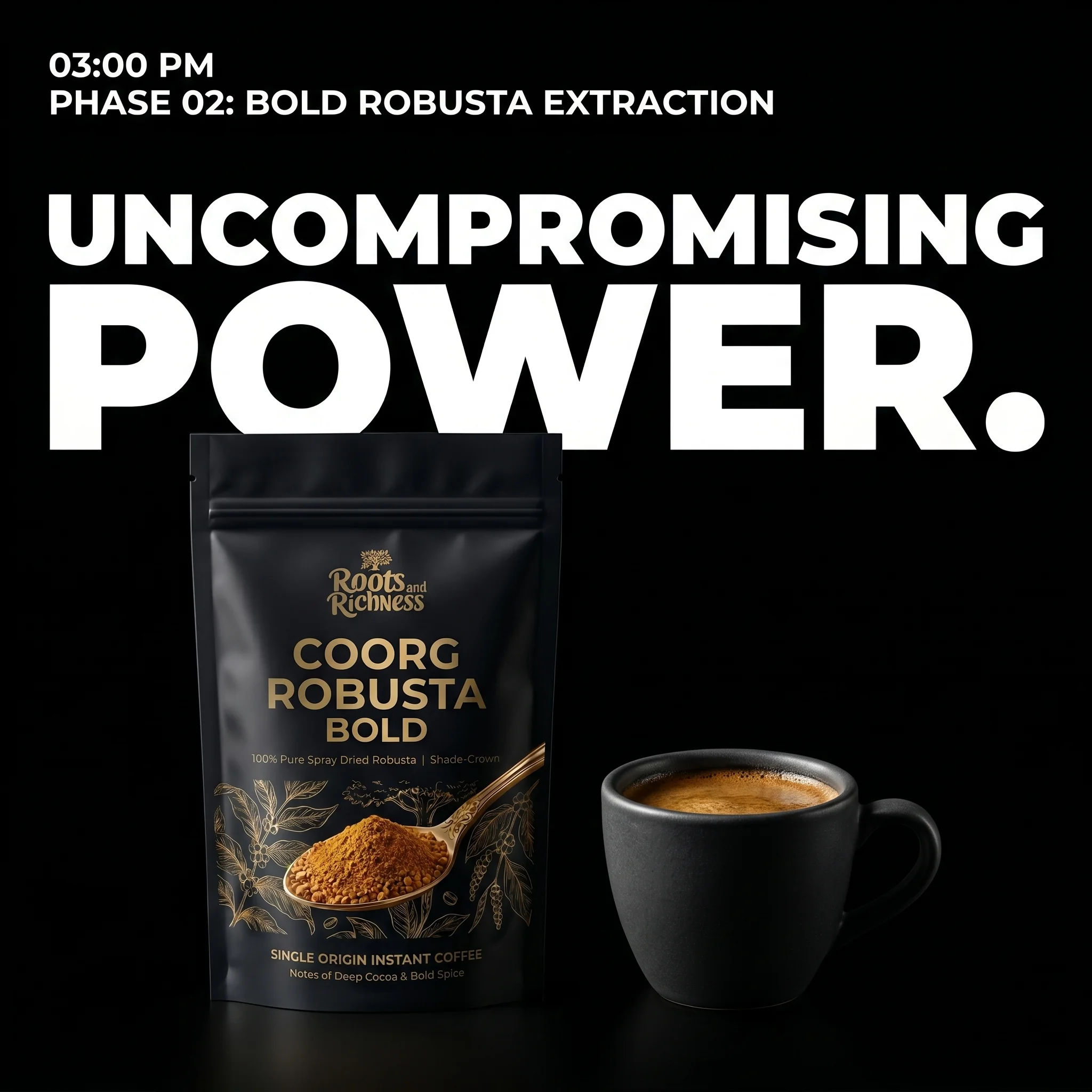
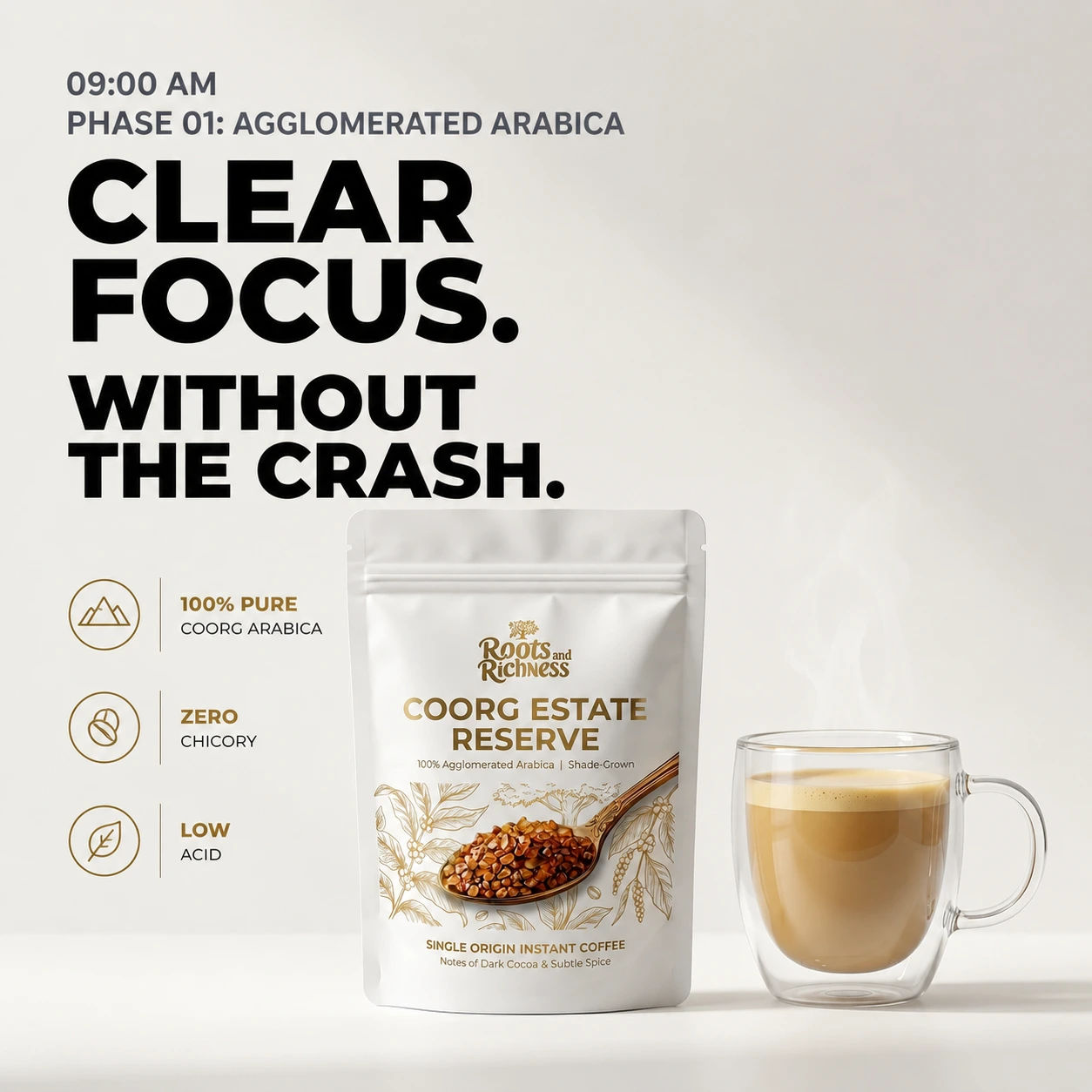
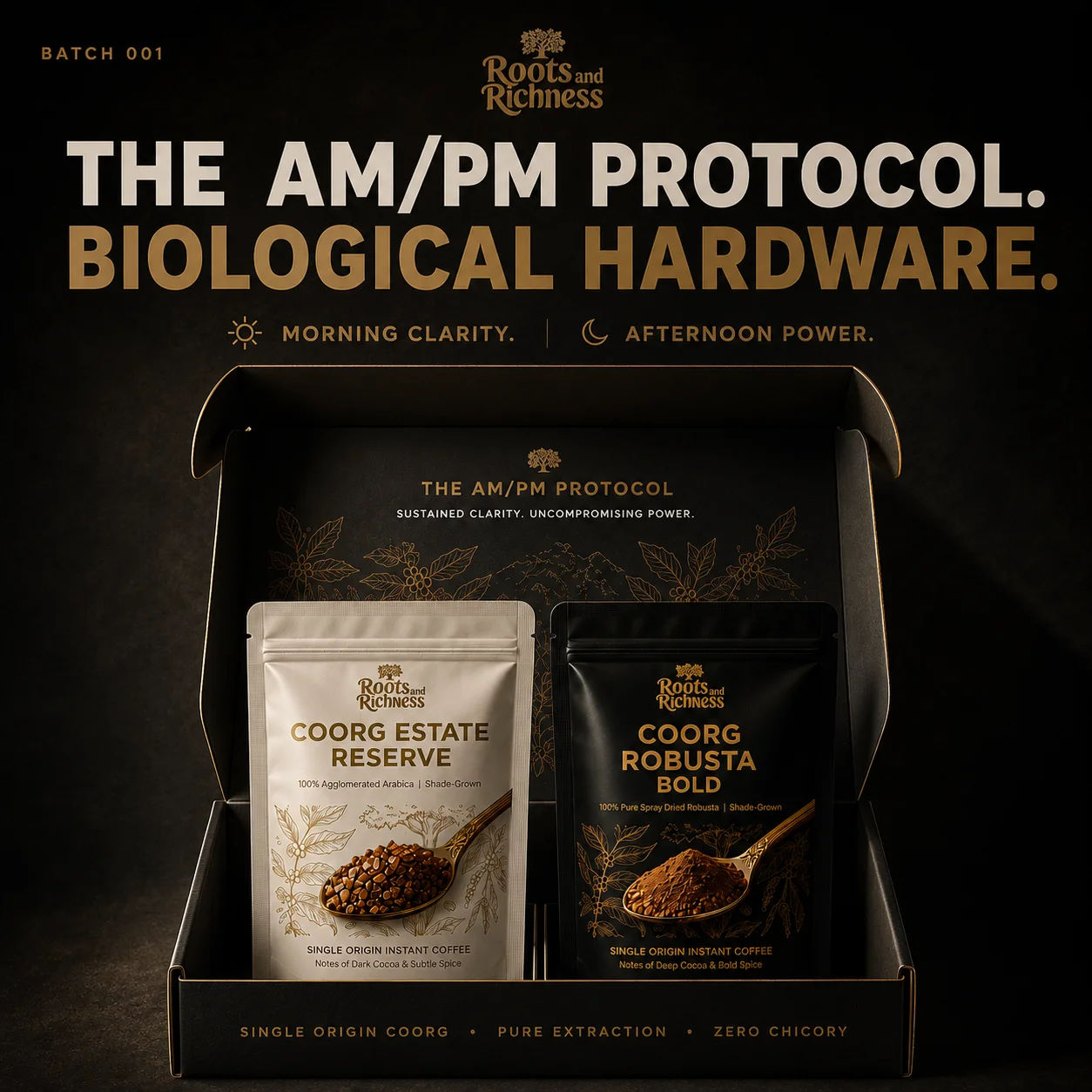
The AM/PM Protocol is built for people who want exactly that. It is two 100g pouches of single-origin coffee from Kushalnagar in Coorg, a smooth Arabica for the morning and a higher-caffeine Robusta for the afternoon, and the ingredients list on both reads only "coffee." No chicory, no fillers, no anti-caking agents. Once chicory is out of the cup, the difference between the two beans becomes easy to taste, which is why we suggest matching each bean to a part of your day.
At ₹799 for 50 cups, that works out to about ₹16 a cup.
Frequently Asked Questions
Is chicory in coffee good or bad? Neither, in itself. It is a safe, traditional ingredient that many filter coffee drinkers choose on purpose. It becomes a concern when it is added to coffee without your knowledge as a cheaper substitute.
Why do South Indians add chicory to filter coffee? Chicory makes the decoction thicker and darker and adds a slightly bitter, caramel-like depth that many people prefer with milk. It is a long-standing regional tradition.
Is chicory healthier than coffee? There is no strong evidence that it is. Chicory contains inulin, a prebiotic fiber, but only a small amount reaches your cup, and it has no caffeine.
Can anyone be allergic to chicory? Yes, some people are allergic to chicory. Research on its safety in pregnancy and breastfeeding is limited, so check with your doctor if either applies to you.
Does the AM/PM Protocol contain chicory? No. Both the Arabica (AM) and Robusta (PM) pouches list coffee as the only ingredient.
Want to taste coffee with nothing else in it? Get the AM/PM Protocol — ₹799 for 50 cups · Free shipping · 7-day refund guarantee
Did You Know?
Blending chicory into coffee began in Europe in the early 1800s as a way to stretch scarce, expensive coffee.
Did You Know?
Chicory contains inulin, a prebiotic fiber, but the amount in a cup of coffee is small.
Still Deciding?
Which Coffee Is Right for You?
Morning Person
AM · 100% Arabica
Low acidity, smooth on an empty stomach, gentle caffeine for a clear-headed start.
Shop AM ArabicaNeed an Afternoon Lift
PM · 100% Robusta
Nearly double the caffeine of Arabica — built for the 2–5 PM slump, clears before bed.
Shop PM RobustaCan't decide? Get both in the AM/PM Protocol →
A few things people usually ask before switching.
Frequently Asked Questions
Is chicory in coffee good or bad?
Chicory in coffee is neither inherently good nor bad. It is a safe, traditional food ingredient that many South Indian filter coffee drinkers choose on purpose, and it becomes a concern only when it is added to coffee without your knowledge as a cheaper substitute.
Why do South Indians put chicory in filter coffee?
Chicory makes the filter coffee decoction thicker and darker and adds a slightly bitter, caramel-like depth that many people prefer with milk. It is a long-standing regional tradition, usually sold as a named coffee-chicory blend.
Is chicory healthier than coffee?
There is no strong evidence that chicory coffee is healthier than regular coffee. Chicory contains inulin, a prebiotic fiber, but only a small amount reaches the cup, and chicory has no caffeine.
Can anyone be allergic to chicory?
Yes, some people are allergic to chicory. Research on its safety during pregnancy and breastfeeding is limited, so anyone pregnant, breastfeeding, or managing a health condition should check with their doctor.
Does the AM/PM Protocol contain chicory?
No. Both the Arabica (AM) and Robusta (PM) pouches list coffee as the only ingredient, with no chicory, fillers, or anti-caking agents.
Featured Products Mentioned in This Article
Experience the premium wood-pressed oils we discussed in this article. Each product is traditionally processed and sourced directly from farmers.